
The Facial Trust Advantage: Why Diverse Faces Build Stronger Connections
Facial trust neuroscience shows your brain decides trustworthiness in milliseconds. Diverse faces matching your target audience amplify that trust signal.
Your brain decides whether to trust a face within 170 milliseconds. That's before conscious thought kicks in. Before you've read the caption. Before you've processed the brand name. Your visual cortex has already rendered a verdict: trustworthy or not.
The neuroscience behind this snap judgment has profound implications for ad creative. And it explains why diverse representation isn't just an ethical choice. It's a performance strategy.
How Facial Trust Works
The University of Sydney's EEG research established that the brain's N170 component, a neural signal that fires specifically in response to faces, distinguishes between authentic and synthetic faces at a subconscious level. Participants' brains detected differences even when they couldn't consciously articulate what was wrong. (For the complete research breakdown, see Why Your Brain Trusts a Stranger's Face More Than a Perfect Render.)
But the N170 doesn't just assess real versus fake. It processes facial familiarity, emotional expression, and social category simultaneously. The brain is running a multi-dimensional trust assessment in less than a fifth of a second, and "does this person seem like someone I'd encounter in my world" is one of the variables.
This is where diverse representation enters the performance equation. When your ad shows a face that matches your target audience's daily social environment, the familiarity signal fires stronger. The trust assessment leans positive. The viewer's subconscious says "this person is credible" before the conscious mind has even engaged.
When the face doesn't match, the familiarity signal is weaker. Not necessarily negative, but weaker. In a scroll environment where you have 1.5 seconds to earn attention, weaker trust signals translate directly to lower hook rates and higher scroll-past rates. This is why reaction clips featuring Latin and Latina creators consistently over-index with Hispanic audiences — the familiarity signal fires at full strength from the first frame.
 Familiar faces trigger stronger trust signals. For diverse audiences, that means diverse creators.
The Matching Hypothesis in Ad Creative
Psychologists call this the similarity-attraction effect: we tend to trust, like, and be persuaded by people who resemble us. In advertising, this has been validated repeatedly. Ads featuring models or presenters who match the target audience's demographic profile outperform mismatched creative on engagement, recall, and conversion metrics.
This isn't about identity politics. It's about how the brain's trust circuitry works. A Hispanic consumer scrolling past a product reaction video will process a Latin creator's face differently than they'll process a face from a different demographic background. The Latin face activates familiarity pathways. The emotional expression reads in a culturally familiar register. The trust response is faster and stronger.
86% of consumers trust brands that use UGC over those relying on influencer marketing, according to industry surveys. (See 86% Trust Brands Using UGC for the full data.) That trust premium is built on perceived authenticity. And authenticity perception is stronger when the face on screen matches the viewer's social and cultural context.
Beyond Matching: The Expressiveness Variable
Audience matching explains why diverse faces help. But it doesn't explain why some diverse faces help more than others. That's where expressiveness enters the equation.
As explored in Why Latin Creators Dominate Emotional UGC, Latin creators tend to bring a higher baseline level of facial expressiveness, emotional range, and communicative warmth to their content. This expressiveness advantage amplifies the trust signal beyond what demographic matching alone provides.
A face that matches your audience builds trust through familiarity. A face that matches your audience and communicates with heightened expressiveness builds trust through familiarity plus emotional contagion. The viewer doesn't just recognize the creator as "someone like me." They feel the creator's reaction, which triggers the neural mirroring response that drives engagement.
Human-led emotional storytelling generates a 3.2x stronger emotional response than AI avatars, according to HubSpot data. That multiplier gets even larger when the human on screen shares the viewer's cultural context, because cultural familiarity removes the processing friction that might otherwise dampen the emotional mirroring effect.
The General-Market Paradox
Here's an insight that surprises many media buyers: diverse faces often outperform homogeneous faces even in general-market campaigns.
The reason connects back to the expressiveness advantage. A Latin creator whose cultural background produces animated, warm, emotionally readable content creates a stronger emotional signal for all viewers, not just culturally matched ones. The familiarity trust bonus applies to matched audiences. The expressiveness trust bonus applies to everyone.
This means diverse creator pools aren't a tradeoff between "audience-specific" and "general-market" performance. They're additive. The diverse creator wins with the matched audience on familiarity and wins with the broader audience on expressiveness. The homogeneous creator only has one channel.
68% of consumers prefer human faces for testimonials, emotional stories, and brand messaging, according to Wyzowl's 2024 survey. The faces that perform best across all audiences are those that combine demographic relevance with emotional clarity. Diverse, expressive creators deliver both.
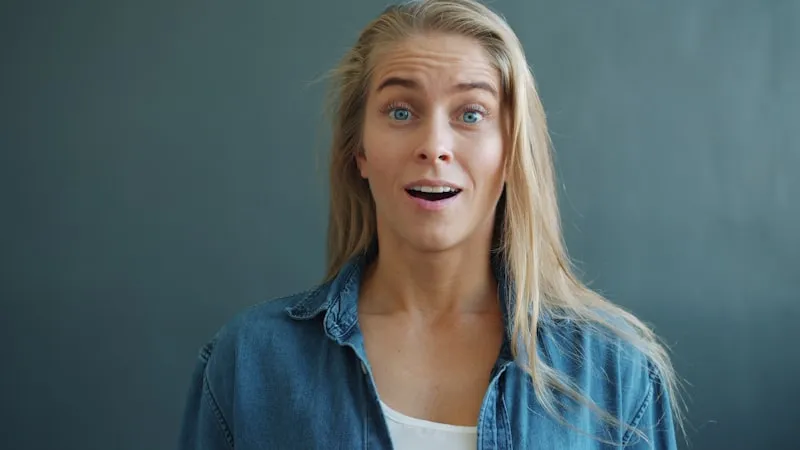 Expressive faces build trust through emotional clarity, regardless of the viewer's background.
Practical Implications for Creative Testing
If your creative testing framework doesn't segment by audience-creator match, you're missing a significant performance variable. Here's what the data suggests:
Test the same product, the same hook structure, the same emotional beat, with creators from different backgrounds against their matched audiences. Measure hook rate, completion rate, and CPA separately for each audience segment. In most cases, you'll find that matched creator content outperforms mismatched content within each segment, and that expressive Latin creators from a well-curated video library often outperform across segments.
This testing approach transforms "diversity" from a brand value into a measurable performance lever. You're not diversifying your creator pool because it's the right thing to do (though it is). You're doing it because the neuroscience of facial trust and the consumer preference data both indicate it will lower your CPA.
Building a Trust-Optimized Creator Pool
The implication is straightforward: your creator pool should reflect your audience. If you're targeting Hispanic consumers (and the $3.4 trillion market makes a compelling case that you should be), you need Latin creators. If you're targeting a general market that includes Hispanic consumers, you still need Latin creators.
LatinaUGC exists to make this easy. 300+ vetted Latin creators, organized by emotion, style, and language, ready to deliver the kind of expressive, culturally authentic content that the facial trust research says will outperform. Not because diversity is trendy, but because the brain science says it works.
Real creators. Real emotion. Ready to test in your next campaign. Browse the Catalog →
Sources
- University of Sydney, "EEG detection of deepfake faces," published in Cognitive Research, 2022
- HubSpot, Human vs. AI avatar emotional response data, recent
- Wyzowl, "Video Marketing Statistics 2024," 2024
- Animoto, "State of Video 2026 Report," January 2026
- Industry data on UGC brand trust (86%), recent