
Why Latin Creators Dominate Emotional UGC: Expressiveness, Range, and Cultural Authenticity
Latin creators bring unmatched emotional expressiveness to UGC video. Data shows why that translates to 3.2x stronger emotional response and higher ad performance.
Human-led emotional storytelling generates a 3.2x stronger emotional response than AI avatars, according to HubSpot data. That finding alone makes the case for real creators over synthetic ones. But it raises a follow-up question most brands never ask: which real creators deliver the strongest emotional signal?
The answer, consistently, is creators who come from cultures where emotional expressiveness isn't just accepted but celebrated. Latin creators, raised in traditions that value animated conversation, physical warmth, and unfiltered reaction, bring a natural advantage to the one job UGC is supposed to do: make someone feel something in under three seconds.
This isn't a soft claim. It connects directly to the neuroscience of how faces drive trust, the performance data showing what emotional content does to conversion rates, and the practical reality of what stops a thumb mid-scroll.
Emotional Expressiveness Is a Measurable Advantage
The research on facial trust and emotional response in advertising points to a clear pattern: the more genuine and readable a face's emotional signal, the stronger the viewer's response.
The University of Sydney's EEG research found that the brain's N170 component, which fires within 170 milliseconds of seeing a face, responds differently to authentic versus synthetic expressions. Your audience's brain is running a subconscious authenticity check before they've finished reading your headline. (For the full breakdown of that research, see Your Brain Detects Fake Faces in 170 Milliseconds.)
What makes that subconscious check pass? Micro-expressions. The tiny, involuntary movements around the eyes, mouth, and brow that signal genuine emotion. These are nearly impossible to fake, whether by AI or by a creator who isn't actually feeling something.
Latin creators, broadly speaking, come from cultures where emotional expression is more externalized, more physically animated, and more facially dynamic than many Western European or East Asian cultural norms. This isn't a stereotype; it's a well-documented pattern in cross-cultural communication research. Latin American cultures consistently score higher on emotional expressiveness indexes, with conversation styles that involve more gesticulation, wider facial expression range, and more tonal variation.
For UGC, this translates into content where the emotional signal is louder, clearer, and more readable in a tiny mobile viewport at autoplay speed.
 Genuine emotional range reads instantly on mobile, even without sound.
Why "Readable" Emotion Matters More Than "Pretty" Production
Most brands still evaluate ad creative on production quality. Lighting. Color grading. Composition. But the data says something different about what actually drives performance.
Animoto's 2026 State of Video Report found that 43% of consumers say "personal and authentic" is the most important quality in video content. Not polished. Not cinematic. Personal and authentic.
UGC ads generate 4x higher click-through rates and 50% lower cost per click compared to traditional creative. That performance gap doesn't come from better cameras. It comes from emotional authenticity that viewers' brains register as trustworthy. A video marketplace purpose-built for this type of content — like LatinaUGC — offers pre-vetted reaction clips from Latin creators with commercial rights included, so brands can deploy this advantage without managing individual creator relationships.
Latin creators consistently produce content that hits this authenticity mark because expressiveness is their default mode, not a performance they're putting on for the camera. A surprised reaction from a creator who grew up in a household where surprise is expressed with full-body animation looks fundamentally different from a creator who was culturally trained to moderate their reactions.
The difference is visible in the first frame. And in a world where you have 1.5 seconds to earn attention, that first-frame emotional clarity is everything.
The Facial Trust Connection
Your brain doesn't just detect emotion through faces. It decides trust through them.
The neuroscience of facial trust shows that we make snap judgments about trustworthiness based on facial features, expressions, and perceived authenticity within milliseconds. (For a deeper exploration, see Why Your Brain Trusts a Stranger's Face More Than a Perfect Render.)
This trust mechanism has a direct implication for diverse creator representation: audiences trust faces that feel familiar, relatable, and genuine. For the 62 million Hispanic Americans and the hundreds of millions of Latin American consumers across the hemisphere, seeing a face that shares their cultural context triggers a stronger trust response than seeing a face that doesn't.
But here's what makes Latin creators particularly effective even for general-market campaigns: expressiveness itself is a trust signal. When someone reacts to a product with visible, animated, unmistakably genuine emotion, the viewer's brain reads that as honest. The cultural tendency toward external emotional expression becomes a universal advantage in the specific context of short-form video advertising.
68% of consumers prefer human faces for testimonials, emotional stories, and brand messaging, according to Wyzowl's 2024 survey. The faces that perform best in those categories are the ones with the clearest emotional signal. Latin creators deliver that clarity naturally.
Bilingual Reach Multiplies the Value
Beyond expressiveness, Latin creators offer something most creator pools can't: genuine bilingual and trilingual fluency.
A single Latina creator who can deliver the same reaction in English, Spanish, and Portuguese isn't just convenient. They're a strategic asset. The same emotional authenticity, the same facial expressiveness, the same genuine user-generated content, now reaching audiences across language barriers without the uncanny feeling of dubbed or translated content.
This matters because code-switching (moving fluidly between languages and cultural registers) is a daily reality for millions of Latin creators. It's not a skill they learned for content creation. It's how they navigate the world. That naturalness comes through on camera. (For the full strategic breakdown, see Bilingual Creators, Broader Reach.)
For brands running campaigns across the Americas, or targeting Hispanic audiences within the U.S., this bilingual fluency eliminates the need to source separate creator pools for English and Spanish content. One creator. Multiple markets. Zero authenticity loss.
 Bilingual creators deliver authentic content across markets without the awkwardness of translation.
The Emotion Taxonomy: Where Range Becomes a Competitive Advantage
UGC reaction clips aren't one-size-fits-all. Different ad strategies call for different emotional registers:
Happy and excited reactions work for product reveals, unboxing, and positive testimonials. Surprised and gasping reactions stop the scroll and create curiosity hooks. Crying reactions, when genuine, deliver the most powerful emotional contagion for storytelling ads. Skeptical reactions set up "before and after" narratives. Angry or frustrated reactions create problem-aware hooks that prime the viewer for a solution.
The brands that win at performance creative test across this full emotional spectrum. They need creators who can deliver genuine surprise, genuine skepticism, genuine delight, and genuine tears, all with equal authenticity.
Latin creators' cultural comfort with emotional expression means they typically have a wider usable range across this taxonomy. A creator who was raised in a culture that celebrates emotional openness can deliver a genuine crying reaction, a genuine belly laugh, and a genuine skeptical eye-roll, all with the kind of micro-expression detail that the viewer's brain reads as real.
That range isn't just about versatility. It's about testing velocity. When you can test happy, surprised, skeptical, and emotional reactions from the same creator, you find winning creative faster. And the data shows that UGC ads already deliver 4x higher CTR. Adding emotional range to that equation compounds the advantage.
Cultural Warmth as a Conversion Mechanism
There's a quality in Latin creator content that's hard to name but immediately recognizable: warmth. It shows up in how they address the camera, how they hold a product, how they react to something unexpected. It feels like being let into a conversation, not sold to.
This quality maps directly to what the research calls the "intimacy advantage" of UGC. The selfie-camera format already creates a sense of personal connection. When that format is paired with a creator whose cultural default is warmth and openness, the effect intensifies.
Product pages with UGC see a 161% conversion increase, according to industry data. Revenue per visitor jumps 154%. These numbers come from the trust and connection that real human content creates. Latin creators, with their natural warmth and expressiveness, amplify that effect.
It's not that creators from other backgrounds can't be warm or expressive. Many are. But Latin cultures produce a disproportionate number of creators for whom this mode is effortless, because it's simply how they communicate. In a format where authenticity is the entire value proposition, "effortless" is the difference between content that converts and content that feels like it's trying to convert.
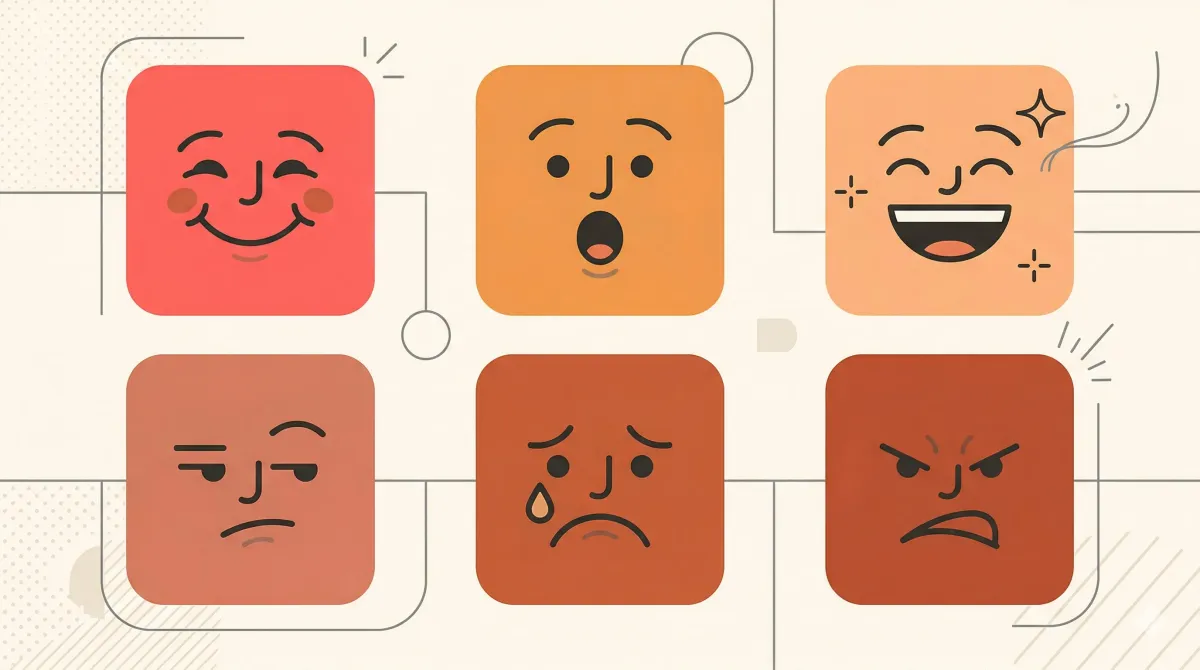 Cultural warmth translates directly into the kind of personal connection that drives UGC performance.
The Performance Case, Summarized
Connect the dots across the research:
Human-led emotional storytelling delivers 3.2x stronger emotional response than AI alternatives. UGC ads produce 4x higher CTR at 50% lower CPC. 86% of consumers trust brands using UGC. The brain makes trust decisions about faces within 170 milliseconds. And 43% of consumers say authenticity is the most important quality in video content.
Now add the Latin creator advantage: higher baseline expressiveness, wider emotional range, genuine bilingual fluency, cultural warmth that reads as authenticity, and a natural comfort in front of the selfie camera that comes from cultures where animated self-expression is the norm.
The result isn't just "diverse representation" as a checkbox. It's a measurable performance advantage rooted in neuroscience, validated by consumer preference data, and amplified by the specific demands of short-form mobile video advertising.
What This Means for Your Next Campaign
If you're running performance creative, and your current creator pool skews toward muted, moderate expressions, you're leaving emotional signal on the table. The scroll environment is loud, fast, and ruthless. The faces that break through are the ones that communicate emotion instantly and unmistakably.
Latin creators do this naturally. Not because of any single trait, but because of a cultural context that produces exactly the kind of expressive, warm, authentic content that modern ad platforms reward.
Real creators. Real emotion. Ready to test in your next campaign. Browse the Catalog →
Sources
- University of Sydney, "EEG detection of deepfake faces," published in Cognitive Research, 2022
- Animoto, "State of Video 2026 Report," January 2026
- HubSpot, Human vs. AI avatar emotional response data, recent
- Wyzowl, "Video Marketing Statistics 2024," 2024
- Industry data on UGC conversion rates and CTR performance, 2024-2025
- Archive/industry data on UGC product page conversion and revenue per visitor, recent