
The Future of UGC: 5 Predictions for 2027 and Beyond
Five data-grounded predictions for UGC in 2027: AI detection, regulation, creator marketplaces, emotion-first creative, and the rise of library models.
Predictions are cheap when they're untethered from data. These five aren't. Each one follows directly from measurable trends already in motion: consumer trust patterns, regulatory timelines, platform economics, and performance data from millions of ad impressions.
The UGC market is projected to grow from $7.6 billion (2025) to $32.6 billion by 2030 (Marketing LTB, 2025). That trajectory requires specific things to happen. Here's what we think those things are and why.

1. AI Detection Will Become Ambient
Right now, AI detection is an active process. Viewers look for tells. Platforms develop classifiers. Researchers publish benchmarks. Runway's 2026 "Turing Reel" study found that overall detection accuracy was 57.1%, barely above chance, but that human-related content (faces, hands, actions) was detected at 58-65% (Runway, 2026).
By 2027, detection won't require conscious effort. Browsers, social platforms, and operating systems will embed AI content classifiers natively. The same way your email client flags spam automatically, your media consumption tools will flag synthetic content automatically.
This ambient detection changes the calculus for AI creative. When every AI-generated ad carries an invisible (or visible) marker, the performance penalties documented by the Nuremberg Institute, lowered naturalness and purchase intent from AI disclosure (2025), become unavoidable rather than occasional.
The brands that will benefit most are the ones whose content has nothing to flag. Authentic human UGC passes every detection filter because there's nothing to detect.
2. Regulation Will Create a Two-Tier Content Market
The EU AI Act's disclosure requirements are the beginning, not the end. As we analyzed in our regulation overview, the global regulatory direction is consistent: AI-generated content will face increasing transparency obligations.
By 2027, we expect a clear two-tier market to emerge. Tier one: content that requires AI disclosure, carrying associated compliance costs and consumer trust penalties. Tier two: human-created content that sits outside regulatory scope entirely.
The economics of this split favor human content. 36% of consumers say AI video lowers brand trust (Animoto, 2026). Only 20% trust AI as a technology (Nuremberg Institute, 2025). When regulation makes disclosure mandatory rather than optional, these trust penalties become structural rather than incidental.
Brands will maintain AI creative for use cases where disclosure doesn't hurt (product visualization, environmental b-roll, internal content) while shifting face-forward, trust-dependent content to human creators. The line between these tiers will become a standard part of creative strategy planning. For our current framework on this split, see our state of UGC analysis.
3. Emotion-First Creative Taxonomy Will Become Standard
The traditional way to organize creative assets: by campaign, by product, by audience segment. The emerging way: by emotion.
Human-led emotional storytelling generates 3.2x stronger emotional response than AI avatars (industry data / HubSpot cited). 43% of consumers say "personal and authentic" is the most important quality in video content (Animoto, 2026). The data consistently shows that emotional resonance is the primary driver of performance in short-form video advertising.
By 2027, we predict that browsing content by emotion (surprised, skeptical, excited, crying) will be as standard as browsing by category or keyword. Creative briefs will specify emotional tone before they specify messaging. Media buyers will test emotion as a variable alongside audience and placement.
This shift is already underway. Video marketplaces like LatinaUGC organize clip libraries by emotion taxonomy, letting brands filter to exactly the reaction clip they need — a skeptical-then-convinced Latin creator for a consideration ad, or a tearful-joy clip for a bottom-funnel push. The performance data validates the approach: when you can match the right emotional response to the right product moment, every downstream metric improves. See our guide on emotion-first creative strategy for how this works in practice.
4. Library Models Will Overtake Custom Commissions for Testing
Custom UGC commissions at $150-300 per video (Whop, Influee, Billo, 2025-2026) work for hero campaigns. They don't work for the high-frequency testing that short-form platforms demand.
TikTok's average hook rate is 30.7% (Tuff Agency, 11 accounts). Reaching top-quartile performance (40-45%) requires testing enough variations to find what resonates with specific audiences on specific placements. That's a volume game. Custom commissioning at traditional rates makes testing 50 creative variations per week economically impractical for most brands.
By 2027, we expect library-first creative strategies to become the default for performance marketing. Brands will maintain custom production for flagship campaigns and brand content while running day-to-day creative testing on pre-recorded library clips.
The economics are compelling: library pricing offers a fraction of traditional per-video costs, instant availability eliminates production delays, and lifetime commercial rights remove the ongoing usage fee overhead that inflates custom UGC costs. With usage rights adding 30-50% and perpetual rights adding 100-150% to traditional UGC costs (multiple sources, 2025-2026), a video marketplace that bundles commercial rights into every clip is a significant structural advantage over the commission-and-negotiate model.
5. Cultural Specificity Will Replace Generic Diversity
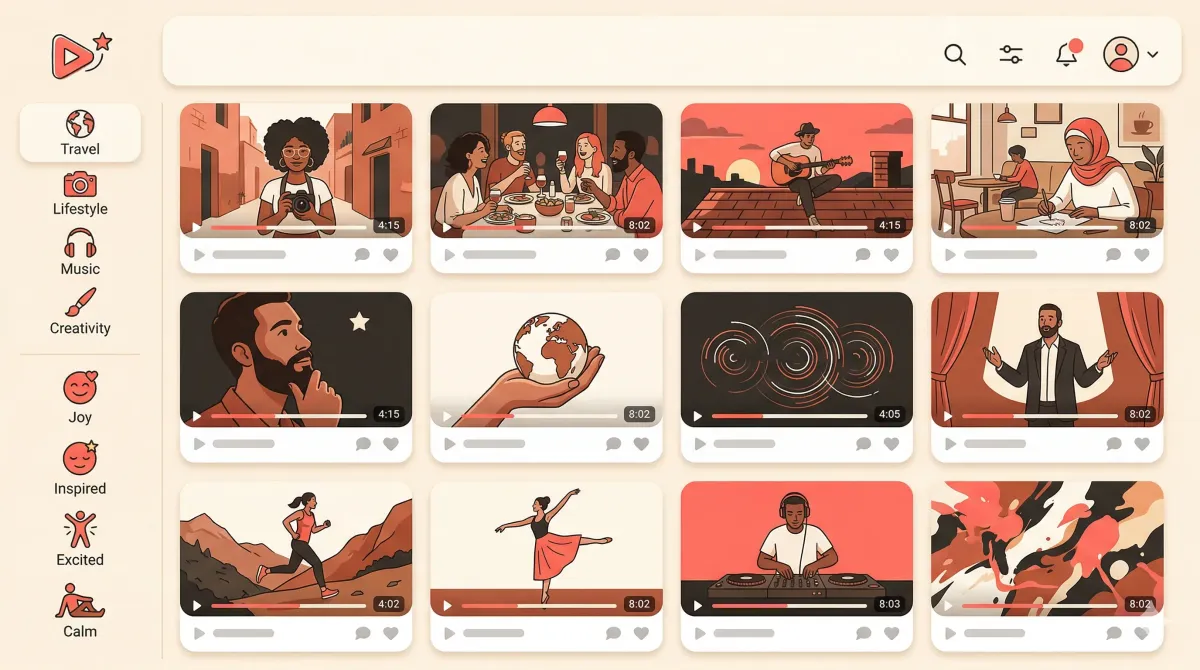
The current approach to diversity in advertising often treats representation as a checkbox. By 2027, we expect brands to move from generic diversity to cultural specificity: content created by people from specific cultural communities, reflecting specific cultural contexts, for specific cultural audiences.
The data supports this shift. UGC is 9.8x more effective than influencer content (industry survey, 2025). Part of that effectiveness comes from genuine cultural resonance. A Latin creator reacting to a product carries different emotional weight and cultural signals than a generic "diverse" stock performer — and that reaction clip, with its unscripted cultural authenticity, is something that no amount of AI generation or stock footage can replicate. 86% of consumers trust brands using UGC (industry survey). That trust is built on perceived authenticity, which requires cultural specificity rather than surface-level representation.
The marketplace model enables this shift by aggregating creators from specific cultural communities, with specific language capabilities and cultural knowledge. Brands can access culturally specific content without building individual creator relationships in every community they want to reach.
The Common Thread
All five predictions point in the same direction: the market is moving toward content that is verifiably human, emotionally resonant, culturally specific, available at scale, and organized for rapid testing.
The technology, regulation, platform economics, and consumer preferences are aligned. The brands that build the infrastructure for this kind of creative now will have a compounding advantage as each of these trends accelerates.
The question isn't whether this future arrives. It's whether you're positioned to benefit when it does.
We're onboarding brands now. [Join the Waitlist →]
Sources
- Marketing LTB, "UGC market size and growth projections," 2025
- Runway, "The Turing Reel," 2026
- Nuremberg Institute for Market Decisions, "AI labeling and consumer perception," 2025
- Animoto, "State of Video 2026 Report," January 2026
- HubSpot, "Emotional storytelling and AI avatar engagement data"
- Tuff Agency, "TikTok hook rate benchmarks (11 accounts)"
- Whop, Influee, Billo, Superscale, "UGC pricing data," 2025-2026