
AI Video in 2026: Impressive Technology, Wrong Use Case for Ads
AI video tools are genuinely impressive. But for performance ads that depend on emotional hooks, the data says real humans still win. Here's a balanced take.
AI video generation has improved at a pace that surprises even the people building it. Runway's Gen-4.5 produces clips where over 90% of viewers cannot reliably distinguish the output from real footage. Pika generates usable b-roll in 10 to 15 seconds. Kling handles motion better than anyone expected two years ago.
This is genuinely impressive technology. And for certain applications, it's already the right choice. The mistake is assuming that because AI video works somewhere, it works everywhere.
For performance advertising built on emotional hooks and human trust, the data consistently shows it doesn't. Not yet. And possibly not ever, for reasons rooted in biology rather than technology.
Where AI Video Excels
Giving credit where it's due is important, especially because our argument is stronger when it's specific rather than blanket.
Product visualization. AI can generate environmental scenes, product placement shots, and lifestyle settings faster and cheaper than traditional production. When your b-roll needs to show a product on a kitchen counter or a phone screen in a coffee shop, AI tools do this well. For the authentic b-roll that actually features a human reaction, however, that work still requires a real person.
Localization. A single video can be adapted into dozens of languages with AI-generated narration and lip-sync. For global brands running the same product demo across 20 markets, this efficiency is transformative.
Internal content. Training videos, onboarding materials, and internal communications don't require the same emotional connection as customer-facing ads. Wyzowl found that 62% of consumers are open to AI avatars for product demos and tutorials. For content where clarity matters more than feeling, AI is sufficient.
Rapid ideation. AI tools are excellent at generating concepts, testing visual approaches, and producing rough cuts that inform creative direction. Using AI to prototype before committing to real production is smart workflow design.
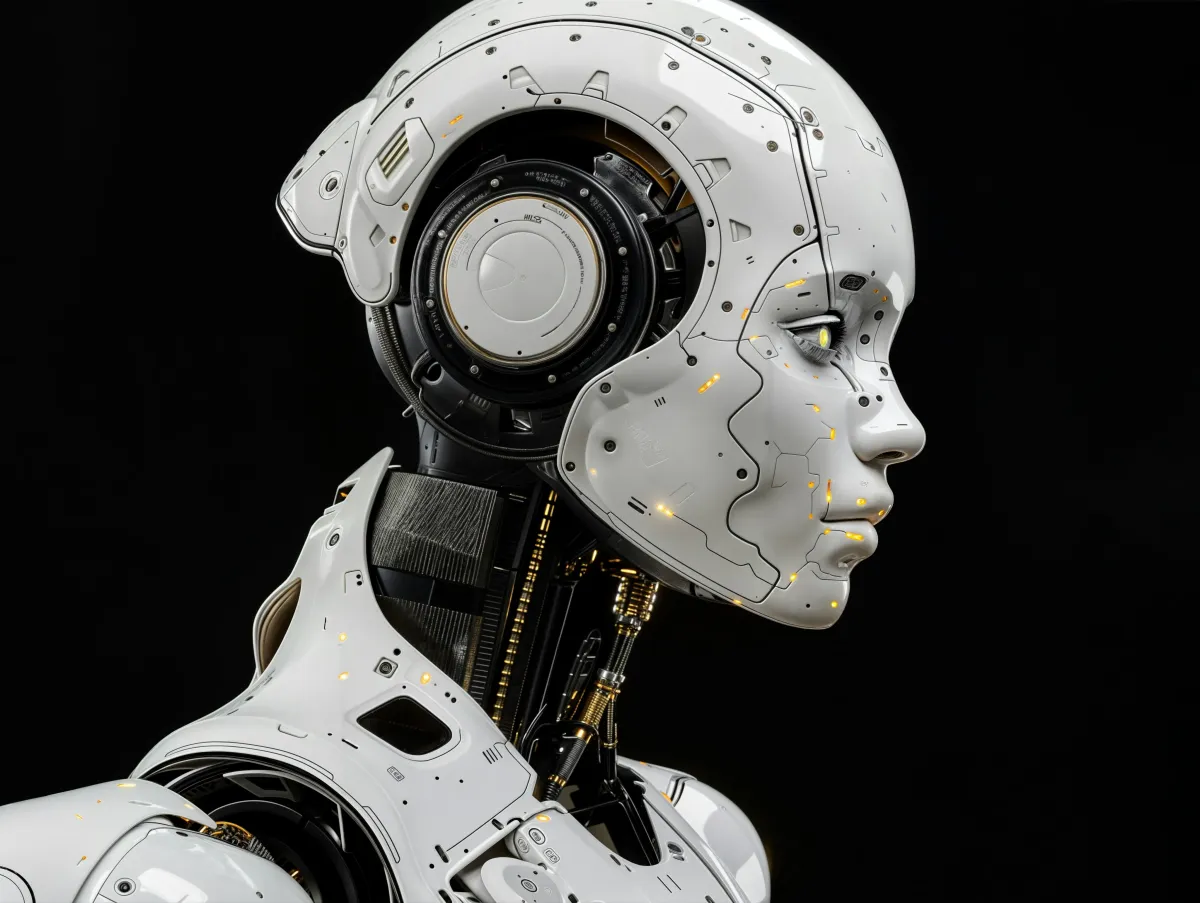 Photo by Gabriele Malaspina on Unsplash
AI video tools are impressive for many use cases. Emotional ad hooks aren't one of them.
Photo by Gabriele Malaspina on Unsplash
AI video tools are impressive for many use cases. Emotional ad hooks aren't one of them.
Where AI Video Falls Short
The limitation is specific and well-documented: AI cannot produce content that triggers the full depth of human emotional processing.
Human-led emotional storytelling generates 3.2x stronger emotional response than AI avatar videos. This gap exists because genuine emotion involves coordinated micro-expressions across dozens of facial muscles, producing patterns that the brain's face-processing system is specifically calibrated to detect.
The N170 neural component fires within 170 milliseconds and processes configural facial information below conscious awareness. When AI-generated faces pass through this system, the brain registers differences even when the viewer cannot articulate them. The result is not outright rejection. It's subtle disengagement: a lower hook rate, a shorter watch time, a missed connection.
On top of the biological response, there's the trust factor. 36% of consumers say watching an AI-generated video lowers their brand trust. 43% say "personal and authentic" is the most important quality in brand video. These conscious preferences align with the subconscious neural data: audiences want real, and their brains are enforcing that preference whether they know it or not.
The Category Divide
Runway's own "Turing Reel" study provides the clearest framework for thinking about this. Their detection accuracy data breaks down by content category:
AI-generated nature and architecture videos were identified at below-chance rates (45-47%), meaning they're effectively indistinguishable from real footage. For these categories, AI is at parity.
AI-generated human content (faces, hands, actions) was identified at higher rates (58-65%). For the specific content type that performance ads depend on, the gap persists.
This suggests a practical division of labor. Use AI for environments, objects, transitions, and establishing shots. Use real humans for hooks, reactions, testimonials, and any moment where emotional connection drives the next action.
The Workflow That Works
The Animoto 2026 report found that marketers are already converging on this model. 63% say AI's biggest value is helping them come up with ideas. 55% use it for editing. 54% for finding relevant content. 55.2% for writing scripts.
Notice what's missing from that list: putting AI in front of the camera. 75% of marketers have hired dedicated internal video creators. 60% report growing in-house production teams. The industry understands, even before the neuroscience research became widely cited, that the human in the frame is not the part to automate.
The workflow that produces the best results: AI handles scripting, editing, distribution, and optimization. Real humans handle the moments the viewer sees. The creative output combines AI efficiency with human authenticity. A UGC marketplace like LatinaUGC makes this hybrid model practical — brands use AI for production tasks while sourcing authentic content and reaction clips from Latin creators with full commercial rights already cleared.
Why This Might Not Change
Some argue that AI video quality will eventually cross even the biological detection threshold. That better models will produce faces that fool the N170 completely. That the uncanny valley will be engineered away.
Maybe. But consider what's being asked of the technology.
The human face-processing system has been refined over millions of years of evolutionary pressure. It is specifically designed to detect subtle deviations in faces because that capability was critical for survival. It processes configural information, micro-expressions, and motion coherence at a speed and precision that makes conscious awareness irrelevant.
Crossing this threshold doesn't just require generating better pixels. It requires producing human behavior that is indistinguishable from reality at the level of neural processing. Every micro-expression, every involuntary muscle movement, every asymmetric contraction pattern that signals genuine feeling. This is a harder problem than resolution or frame rate. It's a simulation problem of extraordinary depth.
Even if AI eventually solves it, the trust penalty may persist independently. If consumers know AI content exists and cannot confirm that what they're watching is real, the suspicion alone is enough to reduce engagement. As the Nuremberg study showed, the label matters as much as the content.
The Balanced Position
We use AI. Most modern businesses do. It's excellent for research, writing, editing, localization, and workflow automation. We're not anti-technology.
We are pro-evidence. And the evidence says that for the specific, narrow, high-stakes job of stopping a scroll and building trust in under two seconds, real human faces with real emotional expression outperform everything else. Not by a little. By multiples.
For the full performance data, see The ROI of Real: Why Authentic B-Roll Clips Outperform AI on Every Metric. For a detailed comparison of the AI video tool landscape, see The AI Video Tools Landscape: What They Do Well, Where They Fall Short.
Real creators. Real emotion. Ready to test in your next campaign. Browse the Catalog →
Sources
- Runway Research, "The Turing Reel," January 2026
- Wyzowl, "2024 Video Marketing Statistics"
- Animoto, "State of Video 2026 Report," January 2026
- University of Sydney, EEG deepfake detection study, 2022
- Nuremberg Institute for Market Decisions, AI-generated content study, 2025
- HubSpot, emotional storytelling 3.2x data