
Why Reaction Videos Stop the Scroll: The Psychology of Emotional Interruption
Genuine emotional reactions break scroll patterns and capture attention. Here's the psychology behind why reaction videos outperform polished creative.
A person scrolling through their feed is in a trance. The thumb moves at a steady rhythm, the eyes scan without committing, and the brain is in a low-engagement scanning mode. Breaking that trance requires something psychologically specific: an emotional interruption.
Reaction videos are built for exactly this. A face expressing genuine surprise, delight, skepticism, or shock creates a pattern break that polished brand creative, no matter how well-produced, rarely achieves. The psychology of why this works explains both the popularity of reaction content and its measurable performance advantages in advertising.
The Scroll Trance and How to Break It
Digital consumer behavior research puts the scroll-stop decision at 1.5 seconds. But that 1.5 seconds is not a cold evaluation. The viewer is already in motion, both physically (thumb scrolling) and psychologically (pattern recognition mode).
In pattern recognition mode, the brain is efficiently categorizing content: ad, meme, friend's post, ad, news, ad. Anything that matches an expected pattern gets categorized and scrolled past without conscious engagement. The brain is optimizing for speed, not depth.
An emotional interruption breaks this loop. When the brain detects a genuinely unexpected emotional expression on a human face, it triggers an involuntary attention shift. This is not a choice the viewer makes. It is a reflexive response rooted in social survival: unexpected emotion on another person's face could signal danger, opportunity, or social information the brain needs to process.
InFront Marketing's neuroscience research confirms the mechanism: the brain locks onto eyes and expressions in under a second. A strong emotional expression does not have to compete for attention. It commandeers it.
 Genuine surprise on a real face creates an involuntary attention shift that polished creative cannot replicate.
Why Genuine Emotion Outperforms Performed Emotion
Not all reaction videos are equal. The psychological distinction between genuine and performed emotion is critical because the brain is remarkably good at distinguishing between the two.
Human-led emotional storytelling produces 3.2x stronger emotional response than AI avatars (HubSpot data). But the multiplier is not just about human versus AI. It is about authentic versus inauthentic. A human actor performing surprise in a studio produces a weaker response than a real person experiencing genuine surprise for the first time.
This is because the brain evaluates emotional expressions on multiple dimensions simultaneously: the timing of micro-expressions, the coherence between eye movement and facial movement, the appropriateness of the emotional intensity to the apparent context. Genuine emotions pass all these checks. Performed emotions often fail one or more.
Animoto's 2026 data captures this at scale: 43% of consumers say "personal and authentic" is the most important quality in video content. Not production value. Not information density. Authenticity. And 51% identify "lack of emotional tone" as a key tell for AI content. Viewers are actively screening for emotional genuineness, even if they do not articulate it that way.
The Specific Emotions That Stop Scrolls
Different emotions create different types of pattern interruptions, and not all are equally effective as scroll-stoppers.
Surprise
Surprise is the most effective scroll-stopping emotion because it is inherently unexpected. A surprised face creates an immediate question: what caused that reaction? The viewer's curiosity system activates, and the cost of scrolling away (missing the answer) suddenly exceeds the cost of staying (a few more seconds of attention).
Skepticism
A skeptical expression is powerful because it signals social evaluation. When a viewer sees someone looking doubtful about a product, it triggers identification: "I would also be skeptical." This creates an investment in the outcome. The viewer wants to see whether the skepticism was justified.
Delight
Genuine delight is socially contagious. Mirror neuron systems in the viewer's brain simulate the emotional state they observe, producing a micro-dose of positive affect. This is pleasurable enough to justify continued attention. The emotional response data showing 3.2x stronger response from human content versus AI applies directly here: delight only triggers mirroring when it reads as genuine.
Crying/Strong Emotion
Intense emotional displays are the strongest pattern breakers but also the most polarizing. A creator genuinely moved to tears by a product or experience creates an extremely powerful scroll-stop. But the emotional intensity must match the context. Disproportionate emotion triggers suspicion rather than engagement.
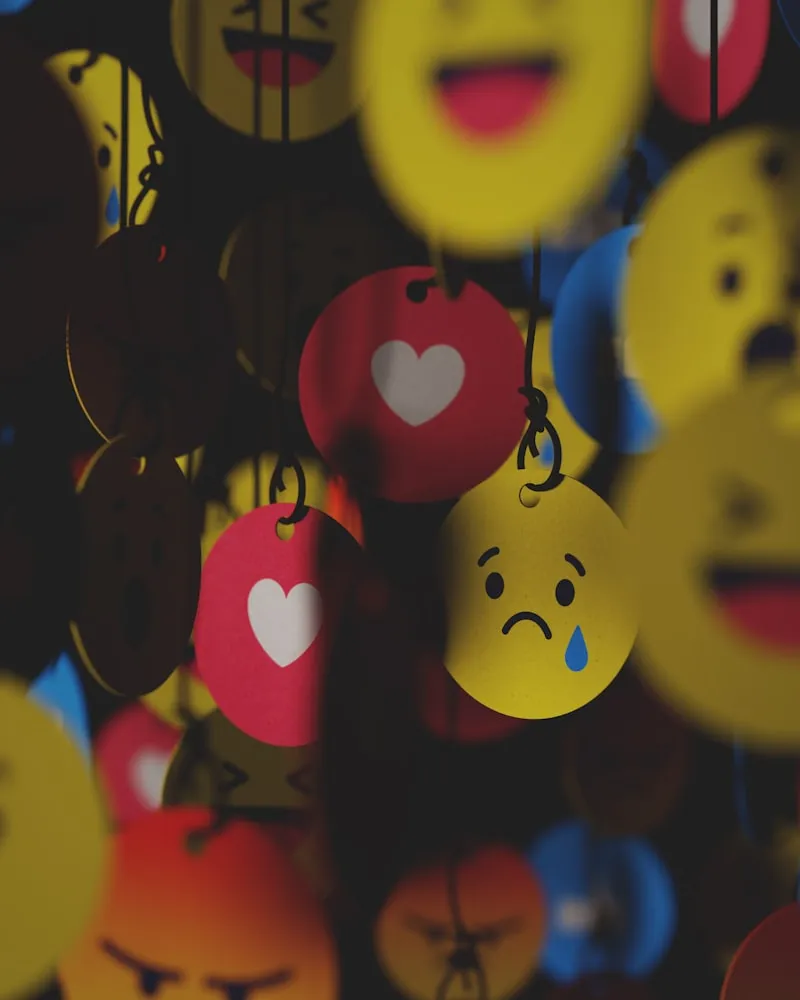 Different emotions serve different hook functions: surprise creates curiosity, skepticism creates identification, delight creates contagion.
The Reaction Video Structure
Effective reaction content follows a specific psychological structure that maximizes the emotional interruption effect.
Frame 1: The face, mid-emotion. Do not build up to the reaction. Start with the reaction itself. The brain's face detection system (170ms, per University of Sydney) needs to encounter the emotional expression immediately. A neutral face that eventually reacts wastes the scroll-stop window.
Seconds 1-3: The escalation or payoff. The initial expression either intensifies (surprise becomes amazement) or resolves (skepticism becomes conviction). This keeps the viewer past the 3-second gate that Facebook's data identifies as the commitment threshold.
Seconds 3-10: The reveal. What caused the reaction? This is where the product, service, or result is introduced. By now, the viewer is committed, and the context arrives when they are most receptive to it.
This structure inverts the traditional ad format. Instead of presenting the product and hoping for a reaction, it presents the reaction and makes the product the resolution. The emotional hook does the work of capturing and holding attention. The product information arrives when the viewer is already engaged.
Why AI Cannot Replicate Effective Reaction Content
The reaction video format is uniquely hostile to AI-generated content. Every element that makes reaction videos work (genuine emotional expression, micro-expression timing, contextually appropriate intensity) is an element that AI struggles with. User-generated content from real creators — particularly the culturally expressive style many Latin creators bring to reaction video — is the format's natural home.
Animoto's 2026 data found that 67% of consumers cite robotic gestures as the top AI tell, and 55% cite unnatural voices. Both of these are immediately apparent in a reaction video format, where the entire value proposition is the naturalness of the response.
The ScienceDirect systematic review (2023) finding that virtual faces are systematically judged as eerier than real faces is amplified in the reaction context. A static AI face might pass casual inspection. An AI face attempting to express genuine surprise enters the uncanny valley at full speed.
This creates a structural advantage for real creator content in the reaction format. The format that stops scrolls most effectively is also the format where authenticity matters most and AI substitution works least.
The Scale Problem (and Its Solution)
If reaction content is the most effective scroll-stopper, the obvious question is: how do you produce enough of it?
Traditional UGC production (booking a creator, shipping a product, directing a reaction) produces one creator's reaction per cycle. Testing multiple emotions, multiple creators, and multiple reaction styles against each other requires access to a volume of genuine reaction content that individual creator bookings cannot efficiently supply.
This is where a library of pre-recorded reaction clips changes the math. Instead of commissioning reactions one at a time, you can browse existing reactions by emotion type, select the ones that match your hook strategy, and test them immediately. The creative testing cycle compresses from weeks to hours. LatinaUGC's video library is structured around this use case — a curated pool of authentic reaction clips from Latin creators, each available with lifetime commercial rights, organized by emotion and style so brands can match the right expression to the right audience.
The brands reaching top-quartile hook rates are not running one reaction hook. They are testing surprise against skepticism against delight, with multiple creators for each emotion, and iterating based on what their specific audience responds to.
What This Means for Your Creative Strategy
Reaction videos work because they exploit a specific psychological mechanism: the emotional interruption of the scroll trance. The mechanism depends entirely on the genuineness of the emotion, which is why real creator content outperforms both AI-generated alternatives and performed/scripted reactions.
For media buyers, the implication is straightforward. If you are not testing reaction-format openers in your creative mix, you are likely leaving hook rate on the table. And if you are using AI or heavily directed/scripted reactions, you are likely underperforming compared to what genuine emotion would deliver.
The data supports this at every level: the neuroscience of face detection, the consumer research on authenticity preference, the platform-specific hook rate benchmarks, and the emotional response multipliers. Genuine reaction content is not a creative trend. It is a performance variable with consistent, measurable advantages.
Real creators. Real emotion. Ready to test in your next campaign. Browse the Catalog →
Sources
- InFront Marketing, "Neuroscience of visual attention and eye fixation"
- University of Sydney, "EEG detection of deepfake faces," 2022
- Animoto, "State of Video 2026 Report," January 2026
- HubSpot, "Human storytelling vs AI avatar emotional response data"
- ScienceDirect, "Systematic review: virtual faces judged eerier than real faces," 2023
- Facebook, "3-second to 30-second retention data"
- Digital Consumer Behaviour Report / thebettercontentclub, "1.5-second attention window"