
The 1.5-Second Window: Neuroscience of Scroll-Stopping Content
Neuroscience shows you have 1.5 seconds to stop the scroll. Learn why real human faces win that window and how to apply it to your ad creative.
You have 1.5 seconds. That is the window, according to digital consumer behavior research, between the moment your ad enters someone's field of vision and the moment their thumb decides: stop or scroll. Everything you spent on production, strategy, targeting, and creative direction comes down to what happens in less time than it takes to blink twice.
And here is what neuroscience tells us about those 1.5 seconds: your viewer's brain is not reading your headline. It is not processing your value proposition. It is doing something far more primitive: scanning for a human face and deciding whether to trust it.
Your Brain Is Running a Threat Assessment, Not Watching an Ad
The 1.5-second attention window is not a marketing abstraction. It reflects how visual processing actually works. Your brain allocates attentional resources in layers, starting with the fastest, most evolutionarily ancient systems.
The fusiform face area (FFA), a specialized region in the temporal lobe, activates within milliseconds of encountering a face. University of Sydney researchers demonstrated this with EEG studies showing the N170 component, a neural signature specific to face processing, fires differently for real versus synthetic faces at just 170 milliseconds after exposure. That is 0.17 seconds into your 1.5-second window, and the brain has already formed a judgment about authenticity.
This is not conscious analysis. The same Sydney study found that brains detected deepfake faces at a 54% rate through neural activity, compared to just 37% conscious identification. Your viewer may not "know" the face looks off. But their thumb already does.
 The scroll decision happens before conscious thought catches up.
The Three Stages of the 1.5-Second Window
Understanding what happens inside this window helps explain why certain creative choices outperform others by such dramatic margins.
Stage 1: Pre-attentive Processing (0-200ms)
In the first 200 milliseconds, the brain processes low-level visual features: contrast, color, motion, and, critically, the presence of a face. InFront Marketing's neuroscience research confirms that the brain locks onto eyes and expressions in under a second. This is not a choice your viewer makes. It is hardwired.
Real human faces trigger this system reliably. They have the natural asymmetry, micro-expressions, and skin texture the FFA expects. Synthetic faces, even high-quality ones, can produce what Nature Scientific Reports (2024) describes as a non-linear neural response: the brain's SSVEP amplitudes show a U-shaped relationship with face stylization level. Nearly real is neurologically worse than obviously fake.
Stage 2: Rapid Evaluation (200ms-800ms)
Once the face is detected, the brain evaluates it. Is this person trustworthy? Is their expression genuine? Does the emotion match the context?
This is where real creators have an asymmetric advantage. A ScienceDirect systematic review (2023) found that virtual faces are systematically judged as eerier than real faces. The uncanny valley is not just an aesthetic problem; research by Mathur and Reichling showed that trust follows the same curve as liking. When eeriness rises, trust falls proportionally.
A real creator expressing genuine surprise at a product activates social cognition systems evolved over millions of years. An AI-generated face doing the same thing triggers perceptual mismatch detectors that the viewer cannot override.
Stage 3: The Stop/Scroll Decision (800ms-1500ms)
By the time the full 1.5 seconds have elapsed, the brain has made a binary commitment: engage or move on. This is where all the upstream processing converges into behavior.
The data on what happens after this decision point is striking. Facebook's own research shows that nearly half of viewers who stay for 3 seconds will continue watching for 30 seconds. The first 1.5 seconds do not just determine whether someone sees your ad. They determine your entire funnel efficiency.
 Neural processing of faces happens in milliseconds, well before conscious evaluation.
Why Real Faces Win the Window Every Time
The competitive advantage of real human faces in the 1.5-second window is not about aesthetics. It is about neural architecture.
Animoto's 2026 State of Video Report found that 78% of consumers trust videos featuring real people. But that statistic describes conscious preference. The neuroscience suggests the gap at the subconscious level is even wider. The University of Sydney's EEG research showed differences in neural response to real versus synthetic faces even when participants did not consciously report noticing anything unusual (Nature Scientific Reports, 2024).
This means your AI-generated presenter may look convincing enough to pass a conscious inspection. But in the 1.5-second scroll window, conscious inspection is not what is happening. Pre-attentive processing is. And pre-attentive processing is brutally honest about what is real and what is not.
Consider the implications for hook rates. Tuff Agency's analysis of 11 TikTok accounts found an average hook rate of 30.7%, with top-quartile performers hitting 40-45%. The gap between average and top-quartile is not explained by better copywriting or flashier transitions. It is explained by what the brain encounters in the first frame.
The Face Advantage Is Measurable in Your Metrics
The neuroscience translates directly into ad performance data. SendShort's analysis of six brands found that human presenters combined with native overlays added 5-10 percentage points to hook rate. That is not a marginal improvement. On a baseline of 20-25% (Vaizle's 2025 Meta benchmark), adding a real human face can move you from below average to top quartile. A video marketplace with a clip library of authentic reaction content from Latin creators makes it possible to test that variable across multiple faces and emotions without a separate production for each.
The compound effect is even more dramatic. Industry data shows 60% more total retention when brands nail the opening. A strong first frame does not just improve the first metric in your funnel. It lifts every metric downstream.
This aligns with what we know about how the brain processes faces versus other visual stimuli. The FFA does not activate for logos, product shots, or text overlays. It activates for faces. A face in the first frame is not a creative choice. It is a neurological cheat code for attention capture.
 A genuine emotional expression triggers neural engagement that no amount of production polish can replicate.
What This Means for Your Ad Creative
The practical implications are clear, and they are uncomfortable for anyone who has invested heavily in AI-generated creative.
First, the opening frame of your video ad should feature a real human face with a visible emotional expression. Not a logo. Not a product shot. Not text. A face. The neuroscience gives you approximately 170 milliseconds before the brain forms its authenticity judgment, and another 800 milliseconds before the trust evaluation is complete. You cannot afford to waste that window on anything other than the stimulus your viewer's brain is evolved to process.
Second, the face needs to be genuinely expressive. Animoto's 2026 data found that 51% of consumers identify "lack of emotional tone" as a key AI tell. The brain is not just looking for a face. It is looking for the micro-movements, the subtle asymmetries, the contextual appropriateness of the expression. Human-led emotional storytelling produces 3.2x stronger emotional response than AI avatars (HubSpot data).
Third, the opening emotion should create a pattern interrupt. Your viewer's brain is in scroll mode, processing a stream of visual stimuli at high speed. A genuinely surprising, delighted, or skeptical expression from a real person breaks that pattern in a way that polished, predictable creative cannot.
The Authenticity Compound Effect
Here is where the 1.5-second window connects to the broader performance story. The scroll-stop is not the end goal. It is the beginning of a cascade.
When a real face stops the scroll, it activates social cognition. The viewer begins processing the person as a fellow human, not as an ad element. This triggers engagement systems (mirroring, empathy, social proof) that sustain attention past the initial hook. Facebook's data shows this directly: nearly half who stay 3 seconds will watch 30 seconds.
Compare this to what happens when an AI face stops the scroll. Even if the initial frame is compelling enough to pause the thumb (and the neuroscience suggests it often is not), the subsequent frames must maintain the illusion. Any perceptual mismatch, robotic gestures (cited by 67% of consumers in Animoto's data), unnatural voices (55%), breaks in emotional tone (51%), triggers a secondary evaluation that undoes whatever attention was captured.
The 1.5-second window is a trust-building opportunity. Real faces compound that trust. AI faces compound suspicion.
The Economics of the First 1.5 Seconds
Media buyers often think of creative quality as a production cost. But the 1.5-second window reframes it as a media efficiency problem.
If your AI-generated creative gets a 15% hook rate and a real-creator version gets 25%, you are not just losing 10 percentage points of initial attention. You are paying the same CPM for 40% less downstream engagement. Your effective cost per engaged viewer is nearly double. This is where sourcing user-generated content from real Latin creators — with lifetime commercial rights included — reframes the cost comparison entirely: the per-clip investment looks different against the hook rate and retention data.
The math gets worse when you factor in the retention data. With 60% more total retention from a strong opening, the real-creator version is not just stopping more scrolls. It is holding attention longer, which means more of your message gets delivered, which means higher conversion rates, which means lower cost per acquisition.
TikTok's own data reinforces this: 63% of top-performing ads deliver their core message within 3 seconds. If your opening frame does not stop the scroll, your message never gets delivered at all. The 1.5-second window is the gatekeeper for your entire campaign ROI.
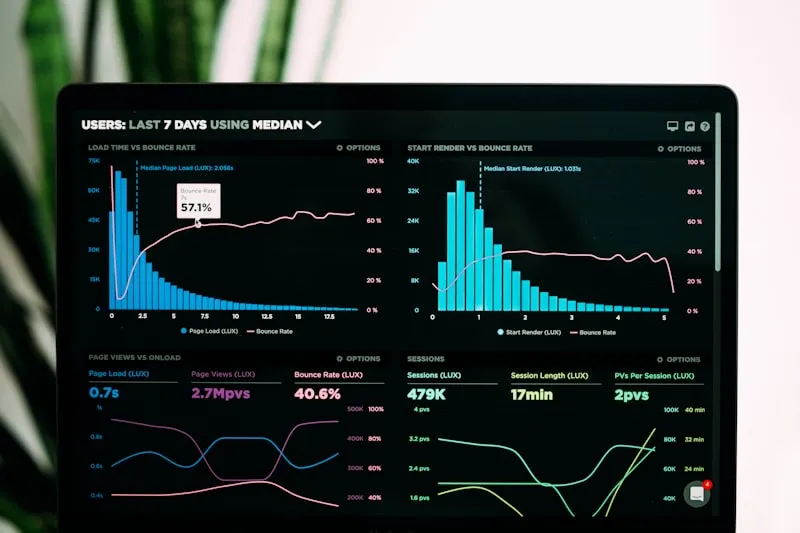 Hook rate improvements compound through every downstream metric in your funnel.
From Neuroscience to Your Next Campaign
The research is converging on a simple insight: the human brain is extraordinarily good at snap judgments about faces, and those snap judgments happen well within the 1.5-second scroll window. Real faces pass these judgments. Synthetic faces, increasingly, do not.
This is not a philosophical argument about authenticity. It is a performance argument about attention economics. Every data point, from the 170-millisecond EEG response to the 60% retention lift to the 5-10 point hook rate improvement, points in the same direction.
The brands winning the scroll-stop are not the ones with the highest production budgets. They are the ones putting a real human face in the first frame.
Real creators. Real emotion. Ready to test in your next campaign. Browse the Catalog →
Sources
- University of Sydney, "EEG detection of deepfake faces," published in Cognitive Research, 2022
- Nature Scientific Reports, "SSVEP amplitudes and face stylization," 2024
- Nature Scientific Reports, "EEG decoding differences in face perception," 2024
- ScienceDirect, "Systematic review: virtual faces judged eerier than real faces," 2023
- Mathur & Reichling, "Uncanny valley trust study (investment game)," multiple years
- InFront Marketing, "Neuroscience of visual attention and eye fixation"
- Digital Consumer Behaviour Report / thebettercontentclub, "1.5-second attention window"
- Animoto, "State of Video 2026 Report," January 2026
- Tuff Agency, "TikTok hook rate analysis (11 accounts)"
- Vaizle, "Meta ads hook rate benchmarks," 2025
- SendShort, "Hook rate analysis (6-brand study)"
- Facebook, "3-second to 30-second retention data"
- HubSpot, "Human storytelling vs AI avatar emotional response data"
- TikTok, "Top-performing ads 3-second message delivery review"
- Industry data, "60% retention improvement from strong openings"
Related Articles
- Your Brain Detects Fake Faces in 170 Milliseconds. Here's Why That Kills Your Ads
- Hook Rate Benchmarks: What 30.7% Average Means and How Real Faces Beat It
- Your Brain Locks Onto Eyes in Under a Second: The Science of First-Frame Creative
- Human Presenters + Native Overlays = +5-10 Points Hook Rate: The SendShort Study