
How to Brief UGC Creators for Maximum Performance: The Complete Template
Step-by-step UGC creator brief template with emotion cues, format specs, and flexibility guidelines that produce scroll-stopping clips.
A bad brief produces bad content. It doesn't matter how talented the creator is, how strong the emotion taxonomy, or how dialed-in your media buying. If your brief is a vague paragraph that says "react naturally to our product," you'll get back footage that's unusable, off-brand, or just flat. Whether you're placing a custom order through a UGC marketplace or working directly with a Latin creator, the brief is what converts their authenticity into usable performance creative.
The difference between UGC that converts at 4x higher CTR and 50% lower CPC (the documented average for UGC ads) and UGC that sits in a folder unused almost always traces back to the brief.
Here's the complete briefing framework we've refined across hundreds of creator assignments.
Why Most Briefs Fail
The typical UGC brief falls into one of two traps. Over-scripting kills authenticity. Under-briefing kills usability.
Over-scripted briefs read like teleprompter copy. The creator delivers lines word-for-word, and the result feels like a bad infomercial. Remember: 43% of consumers say "personal and authentic" is the most important quality in video content (Animoto, 2026). Scripted delivery destroys exactly the quality that makes UGC work.
Under-briefed clips come back with wrong framing, wrong energy, wrong length, or an emotion that doesn't match your campaign. You burn time, budget, and creator goodwill asking for re-dos.
The sweet spot is structured flexibility: lock down the things that must be right, and leave room for the creator's natural delivery on everything else.
The Brief Framework: Seven Sections
Every high-performing brief covers these seven areas. Skip one and you'll feel it in the output.
1. Campaign Context (2-3 Sentences Max)
Tell the creator what this is for. Not the full marketing strategy. Just enough context to orient their performance.
Include:
- Product name and one-line description
- Where the video will run (TikTok, Meta, product page, email)
- The viewer's mindset when they'll see this (scrolling a feed, browsing a product page, watching an ad)
Example: "This is for GlowSerum, a Vitamin C face serum. The clip will run as a TikTok ad targeting women 25-40 who are comparing skincare options. They're scrolling, skeptical, and have seen a hundred serums."
That's it. The creator now knows the stakes, the platform, and the audience energy.
2. Emotion Target
This is the most important section. As we've mapped in our emotion taxonomy, different emotions serve different campaign objectives. A "surprised delight" reaction does completely different work than a "skeptical then convinced" arc.
Specify:
- The primary emotion (e.g., genuine surprise, excited discovery, tearful joy)
- The emotional arc if applicable (e.g., "start skeptical, shift to impressed")
- Intensity level (subtle reaction vs. big expressive moment)
Example: "We need genuine surprise shifting to excitement. Think: you just opened a gift you didn't expect to love. Medium-high intensity. This is a hook clip, so the initial surprise needs to land in the first second."
The reason this matters: 63% of top-performing ads deliver their core message within 3 seconds. If you're briefing for a hook, the emotion has to hit immediately. If it's a testimonial midroll, you have more room for a slow build.
3. Technical Specifications
Non-negotiable format requirements. Be explicit.
- Orientation: Vertical 9:16 (for TikTok/Reels/Shorts) or 1:1 (for feed)
- Duration: Specify a range, not an exact number. "5-8 seconds" gives the creator room to find the natural moment. "Exactly 6 seconds" forces awkward cuts
- Framing: Close-up face (for reactions), waist-up (for GRWM), hands-and-product (for unboxing)
- Audio: Sync sound required, or silent with text overlay? Will you add a voiceover later?
- Lighting: Natural light preferred. No ring light halo (it screams "influencer content" and breaks the authentic feel)
- Background: Specify if it matters. Home setting, plain wall, outdoor. "Wherever feels natural" is a valid instruction
4. What to Show or Reference
If the creator needs to interact with a product, show a screen, or reference something specific, spell it out.
- Product must be visible in frame for at least 2 seconds
- Show the packaging, not just the product
- If reacting to a screen, describe what they're "seeing" (even if you'll composite it later)
- If it's a pure reaction clip with no product, say so: "No product needed. This is a standalone emotional reaction we'll pair with product footage in editing"
5. What NOT to Do
This section prevents the most common re-do triggers. Pull from your past experiences and be specific.
Common "don't" items:
- Don't mention competitors by name
- Don't use the brand name (or do use it, if that's your preference)
- Don't look directly at camera the entire time (or do, depending on format)
- Don't use filters or beauty mode
- Don't start with "Hey guys" or any typical influencer opener
- Don't wear logos of other brands
The "don't" list is where you catch the things that make UGC feel like influencer content instead of authentic reaction footage.
6. Delivery Requirements
- File format: MP4 preferred, MOV accepted
- Minimum resolution: 1080p
- File naming convention (if you have one)
- Deadline: Be specific with timezone
- How to submit (upload link, platform, email)
7. Examples and References
Show, don't just tell. Include 2-3 reference clips that demonstrate the energy, framing, and emotion you're after.
For each reference, note:
- "This one nails the emotion we want"
- "We like the framing here but want more energy"
- "This is the pacing we're going for"
Creators perform dramatically better when they can see the target. Abstract descriptions like "authentic and relatable" mean different things to different people. A 7-second reference clip eliminates that ambiguity. For custom orders on a video marketplace, reference clips from the existing library are ideal: they show the creator exactly the emotional register and production style that has already proven out with your audience.
Briefing by Format: What Changes
The framework above is universal. But specific formats require specific adjustments.
Reaction Clips (Hook Use)
These are your scroll-stoppers. The brief should emphasize:
- First-frame emotion: The reaction must be visible in frame one. No build-up
- Duration: 3-7 seconds. Short and punchy
- Framing: Tight on the face. Eyes and mouth must be clearly visible
- Energy: Higher than conversational. This needs to compete with everything else in a feed
The science backs this up: the brain locks onto eyes and expressions in under a second (InFront Marketing). Your reaction clip has about 1.5 seconds before the viewer decides to scroll or stay. The emotion must be instant.
GRWM / Lifestyle Clips
Longer format, lower intensity, more context.
- Duration: 15-45 seconds
- Framing: Waist-up, natural setting (bathroom mirror, vanity, kitchen)
- Pacing: Conversational. Can include brief narration
- Product integration: Should feel incidental, not staged. "Oh, I've been using this" energy
Testimonial / Review Clips
Structured but not scripted.
- Duration: 15-30 seconds
- Key beats to hit: What the product is, one specific benefit they experienced, their honest take
- Brief the beats, not the words. "Talk about how it changed your morning routine" is good. "Say: this product changed my morning routine" is bad
- Framing: Medium shot, eye contact with camera
Unboxing Clips
All about the reveal moment.
- Duration: 10-20 seconds
- Key moment: The first look at the product. Brief for genuine reaction here
- Hands in frame: The tactile element matters
- Pacing: Slow enough to see the product, fast enough to keep attention
The Emotion-Specificity Scale
One of the most common briefing mistakes is being too vague about emotion. "Look happy" is not a brief. There's a spectrum of specificity, and you want to land in the middle.
Too vague: "React positively to the product." The creator doesn't know if you want subtle approval or jumping-out-of-chair excitement. You'll get something generic.
Too specific: "Gasp, then cover your mouth with your right hand, then slowly smile while looking down at the product." This is choreography, not a brief. The result will look rehearsed, which is exactly what kills UGC performance.
Just right: "We're going for the moment when you try something and it's way better than you expected. Start with curiosity, then show genuine surprise when it works. Big, natural reaction. Think: 'Wait, seriously?'"
The "just right" version gives the creator an emotional target and an internal narrative ("better than expected") without dictating physical movements. This produces the authentic micro-expressions that trigger 3.2x stronger emotional response than scripted delivery.
Common Briefing Mistakes and Fixes
Mistake: Sending the brief as a wall of text in an email. Fix: Use a structured template with clear sections. Creators scan briefs quickly. Make the critical info (emotion, format, deadline) impossible to miss.
Mistake: No reference clips. Fix: Always include 2-3 examples. Even a quick screen recording of "something like this energy" is better than nothing.
Mistake: Briefing for what you want to say instead of what you want the viewer to feel. Fix: Flip the brief. Start with the viewer's emotional journey, then work backward to what the creator needs to do.
Mistake: Not specifying the hook moment. Fix: If this clip will be used as a hook, say so explicitly. "The first frame needs to show [emotion]. This is a scroll-stopper, not a slow build."
Mistake: Assuming the creator knows your brand. Fix: Include a one-liner about the product and audience. Two sentences of context saves days of back-and-forth.
The Pre-Flight Checklist
Before you send any brief, run through this:
- Is the target emotion specific enough that two different creators would deliver something similar?
- Are the technical specs explicit (orientation, duration range, framing)?
- Have I included reference clips?
- Is there a clear "don't" list?
- Does the brief tell the creator what to feel, not what to say?
- Is the deadline specific with timezone?
- Would I be able to film this myself based on this brief alone?
That last question is the acid test. If you couldn't produce the content from your own brief, the creator can't either.
From Brief to Performance
A strong brief is the first link in a chain that ends with ad performance. The emotion you specify determines the hook rate. The format you choose determines the platform fit. The authenticity you protect by not over-scripting determines whether 78% of viewers trust what they see (Animoto, 2026).
Every UGC ad that hits 4x higher CTR started with someone writing a clear, emotion-specific, technically precise brief that gave a real creator room to be real.
Want to get the most out of your creator clips? [Download our free creative brief template →]
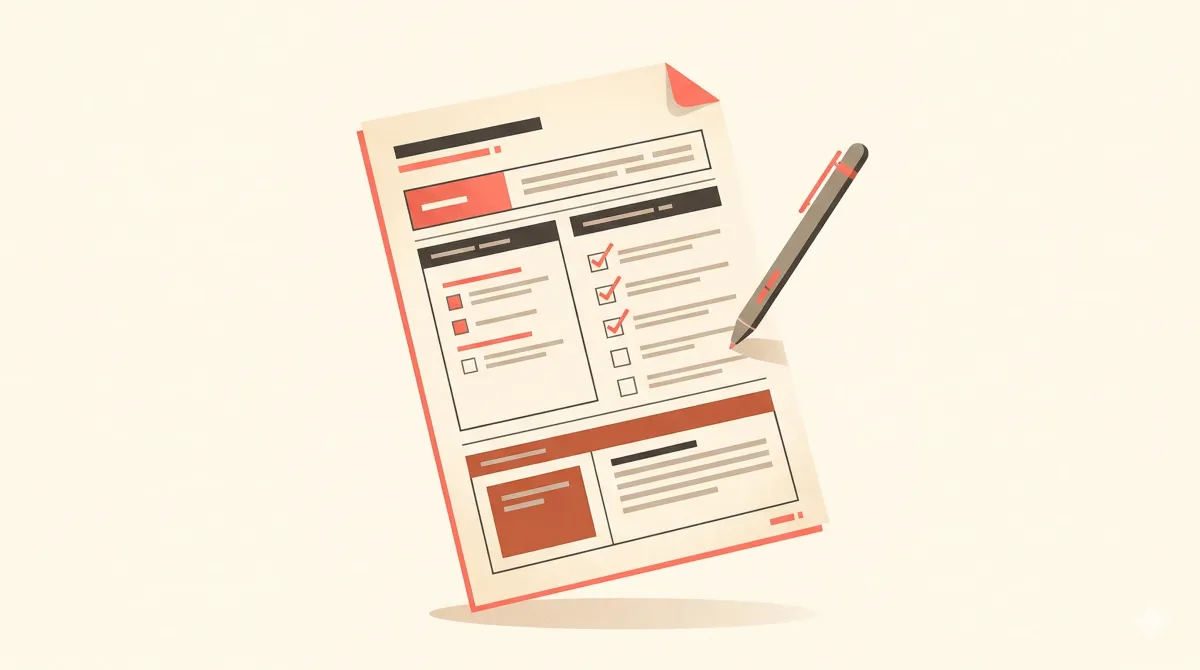 A structured brief is the difference between usable footage and wasted budget.
 The best briefs give creators an emotional target, not a script.
Sources
- Animoto, "State of Video 2026 Report," January 2026
- InFront Marketing, "Neuroscience of Visual Attention in Advertising," Recent
- TikTok, "Top-Performing Ad Creative Review," Recent
- Industry data on UGC ad performance (4x CTR, 50% lower CPC), Multiple sources, Recent