
63% of Top Ads Deliver Their Message in 3 Seconds: How to Nail the Opening
TikTok data shows 63% of top ads deliver their message in 3 seconds. Facebook shows half who stay 3s watch 30s. Here's how to nail the opening.
TikTok reviewed its top-performing ads and found a pattern: 63% deliver their core message within 3 seconds. Not the setup. Not the context. The core message. Facebook's data adds the other half of the equation: nearly half of viewers who stay for 3 seconds will continue watching for 30 seconds.
Three seconds is not a creative constraint. It is a performance filter. The ads that pass it earn extended attention. The ads that do not are paying CPM for impressions that deliver zero message.
The 3-Second Threshold Is a Gate, Not a Timer
Media buyers sometimes interpret the 3-second data as "make everything faster." That misses the point. The research is not saying viewers have 3-second attention spans. It is saying that the first 3 seconds function as a binary gate: viewers either commit to watching or they leave.
The 1.5-second neuroscience window explains why. The brain completes its pre-attentive face detection, trust evaluation, and stop/scroll decision before the 3-second mark. By second 3, the viewer is already engaged or already gone. The ads in TikTok's top-performing group are not faster. They are front-loaded: they use the attention that the first frame captures to immediately communicate value.
This changes how you think about video ad structure. The traditional approach (setup → problem → solution → CTA) wastes the most valuable real estate in the ad on context the viewer has not committed to receiving. The 3-second-optimized approach reverses the order: lead with the payoff, then explain.
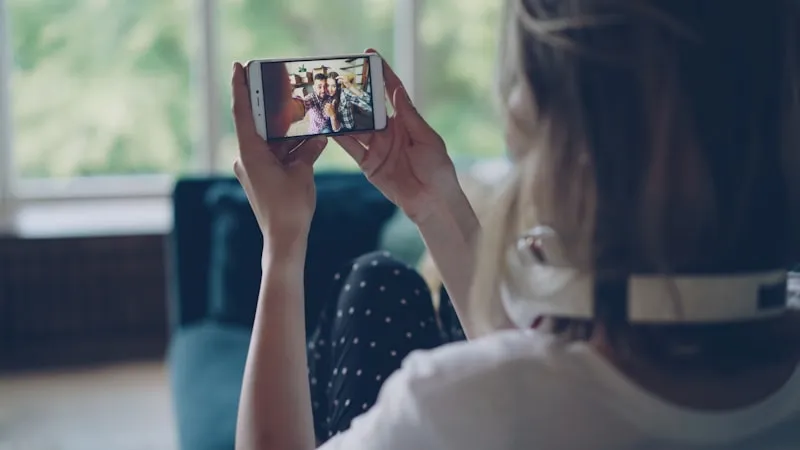 The 3-second mark is where casual scrollers become committed viewers.
What "Delivering the Message" Actually Looks Like
Delivering your core message in 3 seconds does not mean compressing a 30-second script into 3 seconds. It means communicating the essential proposition, the reason to keep watching, in a way that works with the brain's processing speed.
There are three reliable patterns that top-performing ads use to clear the 3-second gate.
Pattern 1: The Reaction Hook
A real person reacts to something with genuine emotion. The reaction itself is the message: this product/result/experience provokes a strong response. The viewer stays to find out what caused the reaction.
This pattern exploits the brain's face-fixation bias (InFront Marketing's data shows the brain locks onto eyes and expressions in under a second) and creates narrative curiosity simultaneously. A surprised expression followed by "wait, this actually works?" delivers both the emotional hook and the core proposition in under 3 seconds. This is the format that Latina creators on LatinaUGC specialize in — authentic reaction clips that arrive with lifetime commercial rights, ready to drop into the first 3 seconds of any ad.
Pattern 2: The Outcome Lead
Start with the result, not the process. "I lost 12 pounds in 6 weeks" is a 3-second message. "Let me tell you about my weight loss journey" is a 3-second setup that delays the message.
The outcome lead works because it gives the viewer a reason to stay: they want to know how the result was achieved. The message (this product delivers a specific result) is communicated instantly. The explanation earns the extended attention.
Pattern 3: The Contrast Open
Show the before-and-after or the expectation-versus-reality in the first 3 seconds. This works particularly well for product demos and unboxing content. The contrast itself communicates value and creates a knowledge gap the viewer wants to fill.
Real creators are essential for all three patterns. The SendShort data showing 5-10 point hook rate improvements from human presenters applies directly: each pattern requires a believable, emotionally expressive human face to work.
The Retention Cascade: Why 3 Seconds Predicts 30
Facebook's finding that nearly half of 3-second viewers continue to 30 seconds reveals something important about how attention works in feeds. The 3-second mark is not a checkpoint. It is a commitment point.
Once a viewer decides to stay past 3 seconds, they have shifted from passive scanning to active watching. The cognitive cost of switching away increases because they have invested attention and want the payoff. This is why the first 3 seconds determine not just hook rate but total watch time, message recall, and conversion.
Industry data quantifies the cascade: brands that nail the opening see 60% more total retention. A 3-second hook is not just winning 3 seconds. It is winning the entire view.
This is where the math gets compelling for media buyers. Hook rate benchmarks show average performance at 20-25% on Meta and 30.7% on TikTok. Moving from average to top-quartile (30%+ on Meta, 40%+ on TikTok) does not just improve one metric. The retention cascade means every downstream metric improves proportionally.
 The first 3 seconds are not the beginning of your ad. They are the ad. Everything after is bonus.
The Real Creator Advantage in the 3-Second Window
All three hook patterns (reaction, outcome lead, contrast open) depend on one element: a believable human delivering the message. This is where the gap between real creators and AI-generated presenters becomes a performance variable.
Animoto's 2026 data found that consumers identify three primary AI tells: robotic gestures (67%), unnatural voices (55%), and lack of emotional tone (51%). Every one of these tells is detectable within the 3-second window. A reaction hook fails if the reaction looks robotic. An outcome lead fails if the voice sounds synthetic. A contrast open fails if the emotional tone does not match the content.
Human-led emotional storytelling produces 3.2x stronger emotional response than AI avatars (HubSpot data). In a 3-second window, that multiplier is the difference between clearing the gate and losing the viewer.
The practical implication: the fastest way to improve your first-3-second performance is not better scripting or faster editing. It is putting a real, emotionally expressive human in the opening frame. The neuroscience (170ms face detection), the platform data (63% of top ads front-load the message), and the consumer research (78% trust real people) all converge on the same conclusion.
Building a 3-Second Testing System
Knowing that the first 3 seconds matter is step one. Building a system to optimize them is where the performance gains live.
The most effective approach is to treat the first 3 seconds as a modular, testable unit separate from the rest of the ad. Create multiple openers for the same body content. Test different hooks (reaction versus outcome lead versus contrast), different creators, different emotional tones.
TikTok's 63% stat implies that the remaining 37% of top-performing ads found other ways to succeed. Do not over-index on a single formula. The point is not to follow one pattern rigidly. It is to front-load value in whatever form fits your product and audience, then measure ruthlessly.
What you should be testing:
- Different creators delivering the same hook
- Same creator, different emotional openers (surprise vs. skepticism vs. delight)
- Reaction hooks vs. outcome leads vs. contrast opens
- Direct gaze vs. environmental context in the first frame
- With and without text overlay in the opening
Each test produces hook rate data that tells you which combination of face, expression, and message structure clears the 3-second gate most effectively for your specific audience. The brands operating in the 30-50% hook rate range (Zeely data) are the ones running this kind of systematic testing.
From Data to Your Next Ad
The 3-second window is the highest-leverage creative decision in your campaign. TikTok's top performers prove that front-loading the message works. Facebook's retention data proves that clearing the 3-second gate predicts total performance. And the neuroscience proves that a real human face is the most reliable tool for capturing the attention needed to deliver that message.
The question is not whether to optimize your first 3 seconds. It is how many variations you can test. A library of diverse creator reactions gives you the raw material to run the tests that move your hook rate from average to top quartile. A video marketplace with pre-recorded user-generated content from Latin creators compresses that testing cycle dramatically — no brief, no shoot, no waiting.
Real creators. Real emotion. Ready to test in your next campaign. Browse the Catalog →
Sources
- TikTok, "Top-performing ads 3-second message delivery review"
- Facebook, "3-second to 30-second retention data"
- Tuff Agency, "TikTok hook rate analysis (11 accounts)"
- Vaizle, "Meta ads hook rate benchmarks," 2025
- Zeely, "Meta-ads hook rate optimization analysis," 2025
- Animoto, "State of Video 2026 Report," January 2026
- InFront Marketing, "Neuroscience of visual attention and eye fixation"
- HubSpot, "Human storytelling vs AI avatar emotional response data"
- SendShort, "Hook rate analysis (6-brand study)"
- Industry data, "60% retention improvement from strong openings"