
Why the Best UGC Feels Like a FaceTime Call: The Intimacy Advantage
Selfie-camera UGC feels personal because it mimics the visual language of private conversation. Here's why that intimacy drives trust and conversion.
Think about the visual difference between a TV commercial and a FaceTime call from a friend. The commercial: polished, wide-angle, professionally lit, with the subject carefully placed in the frame. The FaceTime call: close-up, slightly unflattering, handheld, with the person looking directly into the lens from arm's length.
Now think about which one you trust more.
That difference, the intimacy gap between produced content and personal content, is the core mechanism behind UGC's performance advantage. And it explains why the best reaction clips, testimonials, and product reviews don't just look like a friend telling you something. They feel like it.
The Visual Language of Trust
Your brain has been trained by years of video calls, selfies, and social media to associate specific visual cues with personal, trustworthy communication. Close-up framing. Direct eye contact with the lens. Natural lighting. Slightly imperfect composition. Casual wardrobe. No visible production infrastructure.
These cues trigger what researchers might call a "private communication" schema. When you see a face filling the frame, looking directly at you from selfie distance, your brain processes it through the same trust framework it uses for personal conversations. Not the framework it uses for advertising.
This is why UGC ads generate 4x higher CTR and 50% lower CPC than traditional creative. The visual language bypasses the "this is an ad" filter that viewers have developed after a lifetime of polished commercial content. The most effective reaction clips in any video library are the ones where the creator's selfie-camera framing feels like a direct call, not a broadcast — authentic content that arrives without the visual markers of production.
The University of Sydney's EEG research found that the brain's N170 component processes faces in under 170 milliseconds. But the trust assessment isn't just about whether the face is real. It's about the context in which the face appears. A real face in a polished commercial setting triggers a different response than the same real face in a selfie-camera context. (For the neuroscience, see Why Your Brain Trusts a Stranger's Face.)
 Selfie-camera framing triggers "personal conversation" trust pathways, not "advertising" defense mechanisms.
Intimacy Scales With Expressiveness
The selfie-camera format creates the container for intimacy. But what fills that container determines how much trust the viewer actually builds.
A creator who is stiff, self-conscious, or emotionally flat in the selfie frame produces content that has the visual language of intimacy but not the emotional substance. The format says "personal conversation" but the energy says "scripted presentation." The brain notices the mismatch.
This is where Latin creators' natural expressiveness compounds the intimacy advantage. Creators who are culturally comfortable with emotional openness, animated facial expression, and conversational warmth fill the intimate format with matching emotional content. The visual language and the emotional language are congruent. The brain reads this congruence as authenticity, and authenticity is the currency of trust.
Human-led emotional storytelling generates 3.2x stronger emotional response than AI alternatives, per HubSpot data. In the selfie-camera format, where the face fills the frame and every micro-expression is visible, that emotional response multiplier is amplified. The intimate framing puts the viewer closer to the emotion. The expressiveness makes the emotion impossible to miss.
The Parasocial Shortcut
UGC's intimacy advantage exploits a well-documented psychological mechanism: parasocial interaction. When someone addresses the camera directly, the viewer's brain partially processes the interaction as a real social exchange. Not fully, but enough to activate the same trust, liking, and persuasion pathways that real social interactions engage.
The selfie-camera format maximizes parasocial connection because it most closely mimics the visual experience of a one-on-one conversation. The creator is looking at you. The distance matches conversational distance. The casual environment signals informality and honesty.
43% of consumers say "personal and authentic" is the most important quality in video content, according to Animoto's 2026 report. They're describing the product of successful parasocial connection: content that feels personal even though it's mass-distributed. The selfie-camera UGC format is the most reliable way to achieve that feeling.
Why Overproduction Kills the Effect
This explains a counterintuitive performance pattern that confuses many brands: higher production quality often produces lower engagement in UGC-style content.
When you add professional lighting, a gimbal, a lavalier microphone, and color grading to a creator's reaction video, you increase the technical quality. But you also shift the visual language from "personal conversation" to "produced content." The viewer's brain reclassifies the content. The "this is a friend telling me something" frame gets replaced by the "this is an ad trying to persuade me" frame.
The result: higher production value, lower trust, lower engagement, higher CPA.
As explored in Why Reaction Videos Stop the Scroll, the scroll-stopping power of reaction clips comes specifically from their rawness. The less polished the format, the more the viewer's brain treats it as authentic social content rather than advertising.
This doesn't mean production quality doesn't matter. Audio needs to be clear. The creator needs to be well-framed. The emotion needs to be visible. But there's a ceiling beyond which additional polish actively hurts performance by breaking the intimacy frame.
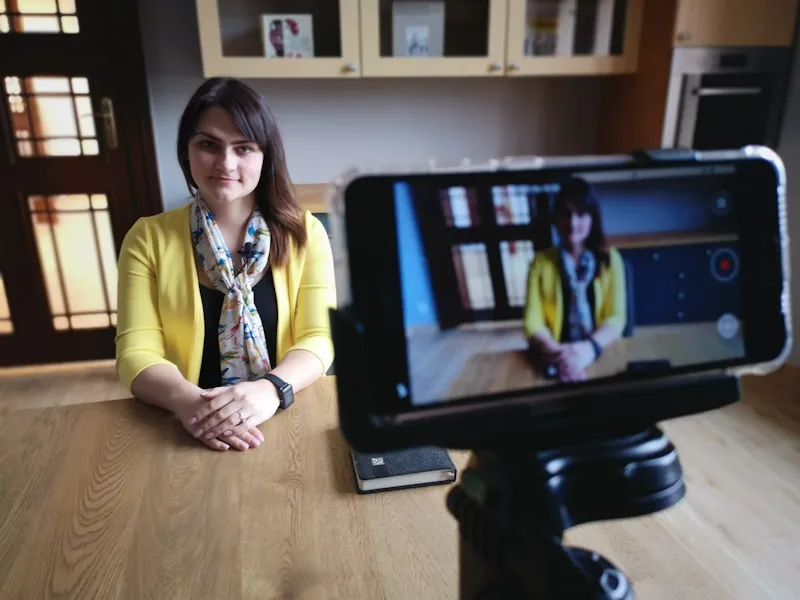 The slight imperfection of selfie-camera UGC is a feature, not a bug. It signals authenticity.
The Intimacy Hierarchy
Not all UGC formats create equal intimacy. Here's a rough hierarchy, from most intimate to least:
Direct-to-camera testimonial (creator speaking to the viewer about a personal experience) sits at the top. The combination of direct eye contact, personal narrative, and emotional vulnerability creates maximum parasocial connection.
Reaction clips come next. The creator is reacting to something, not addressing the viewer directly, but the selfie framing and genuine emotion still create strong intimacy.
GRWM (Get Ready With Me) creates a different kind of intimacy: the viewer is invited into a personal routine. The intimacy comes from access rather than address.
Product reviews and unboxing create moderate intimacy. The focus is shared between the creator and the product, which distributes the parasocial connection across two reference points.
Brands that understand this hierarchy can match format to funnel stage. Maximum intimacy formats (testimonials, direct reactions) for bottom-of-funnel conversion where trust is the critical variable. Moderate intimacy formats (reviews, unboxing) for mid-funnel where information and trust need to coexist.
Warmth Amplifies Intimacy
The final piece of the puzzle: cultural warmth. The selfie format creates the intimacy frame. Expressiveness fills it with emotion. But warmth, the quality of making the viewer feel welcomed and included rather than performed at, is what makes the parasocial connection stick.
Latin and Latina creators' cultural default toward warmth in interpersonal communication translates directly into user-generated content that feels inviting rather than broadcasting. The viewer doesn't just feel like they're watching someone. They feel like someone is talking to them, specifically, with genuine care about their experience. Sourcing this content through a UGC marketplace ensures the commercial rights are settled upfront — so you can focus on the creative strategy, not the paperwork.
Product pages with UGC see a 161% conversion increase. Revenue per visitor jumps 154%. These numbers reflect the trust and connection that intimate, warm, authentic content builds at scale. Latin creators, operating in the selfie-camera format that maximizes intimacy, deliver this connection as a default rather than a performance.
Real creators. Real emotion. Ready to test in your next campaign. Browse the Catalog →
Sources
- University of Sydney, "EEG detection of deepfake faces," published in Cognitive Research, 2022
- Animoto, "State of Video 2026 Report," January 2026
- HubSpot, Human vs. AI avatar emotional response data, recent
- Industry data on UGC ad performance (4x CTR, 50% lower CPC), recent
- Archive/industry data on UGC product page conversion (161%) and revenue per visitor (+154%), recent