
The Cost Math: Traditional UGC at $150-300/Video vs. Library Clips
Traditional UGC costs $150-300 per video before usage rights and rush fees. Library clips change the math entirely. Full pricing breakdown inside.
The performance case for UGC is settled. 4x higher CTR, 50% lower CPC, 104% conversion lift. But performance is only half of the ROI equation. The other half is cost.
And this is where most brands hit a wall. Traditional custom UGC runs $150-$300 per video at base rates. Add usage rights, rush delivery, revisions, and perpetual licensing, and that number can triple. At those rates, the volume of creative testing that performance marketing demands becomes prohibitively expensive.
Library UGC clips offer a fundamentally different cost structure. This article breaks down both models in detail so you can run the math for your own budget.
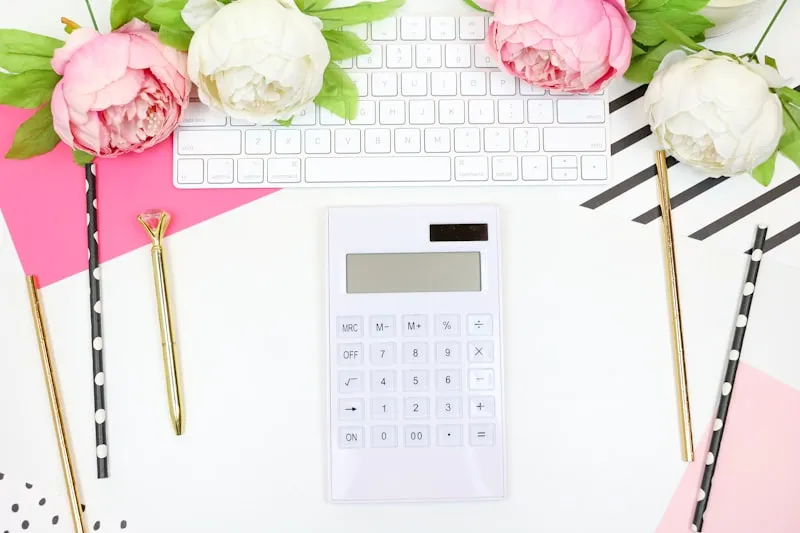 The base rate for UGC is only the beginning. Usage rights, rush fees, and revisions can triple the effective cost per video.
Traditional Custom UGC: The True Cost
The advertised rate for custom UGC is typically $150-$300 per video. This gets you a single piece of content from a single creator, usually with limited usage rights. Here's what the actual cost looks like once you account for the standard add-ons.
Usage rights add 30-50% to the base rate. Most custom UGC is priced for organic use only. If you want to run it as paid media (which is the entire point for performance marketers), you pay extra. Some creators and platforms charge per-platform fees, meaning TikTok rights, Meta rights, and YouTube rights are separate line items.
Rush delivery adds 25-50%. Standard turnaround for custom UGC is 5-10 business days. If you need content faster (and performance marketers always do), you pay a premium.
Raw footage or additional hooks add 30-50%. If you want the unedited footage to cut your own variations, or if you want the creator to record multiple hook versions for testing, each addition increases the cost.
Perpetual rights can add 100-150% to the base rate. Some creators and platforms grant time-limited licenses (90 days, 6 months). If you want to use the content indefinitely, the cost can more than double.
A realistic per-video cost for a custom UGC video with paid media usage rights and reasonable turnaround: $250-$500. For perpetual rights with rush delivery: $400-$750+.
The Volume Problem
Performance marketing runs on volume. You can't optimize creative with one ad. You need 10-20 variations to find winners, then you need fresh creative every 2-4 weeks as fatigue sets in.
At $250-$500 per video (realistic all-in cost), a monthly creative cycle of 15 new videos costs $3,750-$7,500. Over a year, that's $45,000-$90,000 in UGC alone, before you've spent a single dollar on media.
For bootstrapped e-commerce brands or early-stage companies, these numbers are prohibitive. Even for well-funded brands, the cost creates a bottleneck: you end up testing fewer variations than you should, which means slower learning and suboptimal creative performance.
Brands that overcome this bottleneck test more, learn faster, and find winners sooner. Those that don't end up running the same 3-5 creatives for weeks until performance degrades.
Bundle Discounts: Marginal Relief
Most UGC platforms offer bundle discounts averaging 10-25% for bulk orders. Ordering 20 videos instead of 5 might reduce the per-video rate by 15-20%.
While helpful, bundle discounts don't solve the fundamental cost structure. A 20% discount on a $300 video gets you to $240. That's still $4,800 for a 20-video test batch. The volume constraint remains.
Bundles also introduce commitment risk. You're paying upfront for a batch of content from creators you may not have worked with before. If the creative doesn't perform (and most creative doesn't; that's why you test at volume), the investment is sunk.
 Library clips eliminate per-project negotiation, usage rights fees, and revision cycles. The content is ready when you need it.
Library UGC: A Different Cost Model
Library UGC clips work on a fundamentally different model. Instead of commissioning custom content from individual creators, you browse a library of pre-recorded clips and license what you need.
The cost advantages are structural, not just numerical.
No usage rights negotiation. Library clips come with commercial rights included — lifetime commercial rights, not time-limited licenses. You don't pay extra to run them as paid media. You don't pay per-platform fees. The license is straightforward.
No rush fees. The content already exists. There's no turnaround time because there's no production to wait for. You can launch a campaign the same day you select clips.
No revision cycles. With custom UGC, you often need 1-2 rounds of revisions, each adding time and sometimes cost. Library clips are what they are. You preview the full watermarked video before purchasing, so there are no surprises.
No creator management overhead. Custom UGC requires briefing creators, managing communications, tracking deliveries, and handling revision requests. Library clips require browsing, selecting, and downloading. The operational cost difference is significant even before you compare per-video pricing.
At LatinaUGC, library clips start from $8 per video with a wallet (or $8 per clip for a single purchase). Bundles from $29. Wallet balances never expire, and larger top-ups earn a volume bonus.
Running the Comparison
Let's compare a realistic monthly creative testing scenario under both models.
Custom UGC scenario: 15 videos per month at an all-in cost of $350/video (including basic paid media rights). Monthly cost: $5,250. Annual cost: $63,000. Turnaround: 5-10 business days per batch. Creative variations limited by budget.
Library UGC scenario: 15 clips per month from a library. Instant availability. Broad taxonomy filtering (emotion, style, use case) lets you find clips that match specific ad concepts. Commercial rights included. Monthly cost: a fraction of the custom model — from $8 per video with a wallet, with no expiry.
The performance data shows UGC of both types outperforms polished brand creative. The cost data shows library clips let you test at significantly higher volume. More testing volume means faster learning, which means better creative performance, which means better ROAS.
The Hidden Cost: Opportunity Cost of Slow Creative Cycles
The most expensive thing in performance marketing isn't the creative itself. It's running suboptimal creative while you wait for better options.
If your current creative cycle takes 10 business days (brief → creator production → delivery → revision → final), that's two weeks where your campaigns are either paused or running fatigued creative. Every day of suboptimal creative is lost revenue.
Library clips compress this cycle to near-zero. You identify a concept, find matching clips, assemble the ad, and launch. The creative bottleneck disappears, and your campaigns stay fresh.
For high-spend accounts, this difference alone can justify the switch. A brand spending $50,000/month on media that's running at 80% of optimal ROAS due to creative fatigue is losing $10,000/month in efficiency. Faster creative iteration recovers that immediately.
When Custom UGC Still Makes Sense
Library clips don't replace every use case. Custom UGC retains clear advantages when you need product-specific content (a creator using your exact product), brand-specific messaging (scripted testimonials or specific talking points), or exclusive content that competitors can't also license.
The smart approach is to use a UGC marketplace's clip library for volume testing and creative experimentation — sourcing reaction clips and authentic b-roll from Latin creators at scale — then invest in custom orders for proven concepts that warrant exclusive, product-specific content.
This hybrid model maximizes both performance and budget efficiency. Library clips handle the testing phase (high volume, low cost, fast iteration). Custom UGC handles the scaling phase (product-specific, exclusive, higher production investment for proven winners).
For more context on the full UGC performance landscape, see our ROI of real analysis and our UGC statistics roundup.
From $8 per clip, with lifetime commercial rights. See how the math works. [View Pricing →]
Sources
- Multiple sources (Whop, Influee, Billo), "UGC Creator Pricing Data," 2025-2026
- Superscale, "UGC Usage Rights and Licensing Costs," 2026
- Industry data, "UGC Bundle Discount Averages," 2025-2026