
Bilingual Creators, Broader Reach: The Strategic Advantage of Spanish-English UGC
Bilingual Spanish-English creators deliver authentic UGC across markets without the authenticity loss of translation. Here's why that's a strategic advantage.
Most brands approach multilingual content the same way: produce the English version, then translate. Dub the voiceover. Subtitle the video. Hand the script to a different creator who speaks the target language.
Every step in that process loses authenticity. And authenticity is the entire value proposition of UGC.
There's a better approach: start with creators who are natively bilingual. Creators who can deliver the same genuine reaction, the same emotional expressiveness, the same trust-building warmth, in English and Spanish (and often Portuguese) without switching into "performance" mode for either language. This is the structural advantage of sourcing through a UGC marketplace like LatinaUGC, where the creator pool is specifically curated for bilingual range and authentic delivery across languages.
Latin creators do this daily. Not as a marketable skill they've cultivated, but as a natural extension of how they live. And that naturalness is exactly what makes bilingual UGC content perform.
The Translation Authenticity Problem
Here's what happens when you translate UGC:
A creator records a genuine, emotionally authentic reaction in English. The brand loves it. Now they need a Spanish version. Option one: dub it. The lip sync is off. The vocal tone doesn't match the facial expression. The viewer's brain, which processes audiovisual congruence automatically, flags it as wrong. Option two: hire a different Spanish-speaking creator. The reaction is different. The timing is different. The emotional beat lands differently. You're now running two distinct pieces of creative, not the same message in two languages. Option three: subtitle it. Better, but you've added a reading task to a format that's designed for instant visual-emotional impact.
None of these options preserve what made the original clip work. The micro-expressions, the vocal inflection, the specific moment of genuine surprise or delight, all of it is tied to the specific person in the specific moment. Translation breaks that connection.
Bilingual creators eliminate this problem entirely. Same face. Same genuine reaction. Same emotional micro-expressions. Different language. The authenticity carries across because it was never a translation. It was always native.
 Bilingual creators deliver the same emotional authenticity in both languages because both are native.
Code-Switching Is a Creative Superpower
Code-switching, the fluid movement between languages within a single conversation or even a single sentence, is a daily reality for tens of millions of bilingual Latin Americans and Hispanic Americans.
In UGC, code-switching can be deployed strategically. A hook delivered in English, followed by a Spanish aside that feels like a personal aside to bilingual viewers. An unboxing reaction that naturally moves between languages. A product review where the most emotionally charged moments land in whichever language carries more emotional weight for the creator.
This kind of content does something no monolingual creative can: it signals cultural fluency. Bilingual viewers recognize it immediately, and it builds trust at a level that goes deeper than language. It says "this person is like me" in a way that a cleanly translated script never can.
For brands targeting the U.S. Hispanic market specifically, this matters. The majority of U.S. Hispanics are bilingual. They consume content in both languages. They switch between English and Spanish media daily. Creative that mirrors this bilingual reality feels more authentic than content that commits rigidly to one language or the other.
The Efficiency Argument
Beyond authenticity, bilingual creators offer a straightforward efficiency advantage.
Traditional multilingual content production requires separate creator sourcing, separate shoots, separate review cycles, and separate performance tracking for each language version. With bilingual creators, you get multiple language versions from a single creator relationship, often in a single session.
This compresses timelines and reduces costs. When a brand needs to test reaction clips across English and Spanish audiences, bilingual Latin creators can deliver both versions with the same emotional beat, the same product context, and the same visual identity — the kind of authentic content that a custom order from a monolingual creator simply cannot replicate. The testing variables are isolated to language and audience, not confounded by different creators with different energy levels and different emotional styles.
At LatinaUGC, creators regularly deliver content in English, Spanish, and Portuguese. That trilingual capability means a single creator can cover the U.S. general market, the U.S. Hispanic market, and Latin American markets with consistent authenticity across all three.
Matching the Platform Reality
TikTok, Instagram Reels, and YouTube Shorts are global platforms with algorithmically driven distribution. Content that resonates with one audience segment can surface to adjacent audiences through the algorithm's engagement signals.
Bilingual content has a unique advantage here. A clip that performs well with English-speaking audiences can organically reach bilingual and Spanish-speaking audiences if the creator's profile signals bilingual content. The algorithm follows engagement, and bilingual creators naturally build engagement across language communities.
Human presenters combined with native overlays produce 5 to 10 points of additional hook rate, according to SendShort's analysis of six brands. (See Hook Rate Optimization: Real Presenters for the full breakdown.) When that human presenter is bilingual, the hook rate advantage extends across two audience pools instead of one.
This isn't theoretical. Brands running bilingual creative on TikTok and Meta routinely find that their Spanish-language versions, when delivered by the same creator who filmed the English version, outperform Spanish-language creative from separate monolingual creators. Same emotional signal, same facial expressiveness, same trust cues. The language is different; the performance advantage is identical.
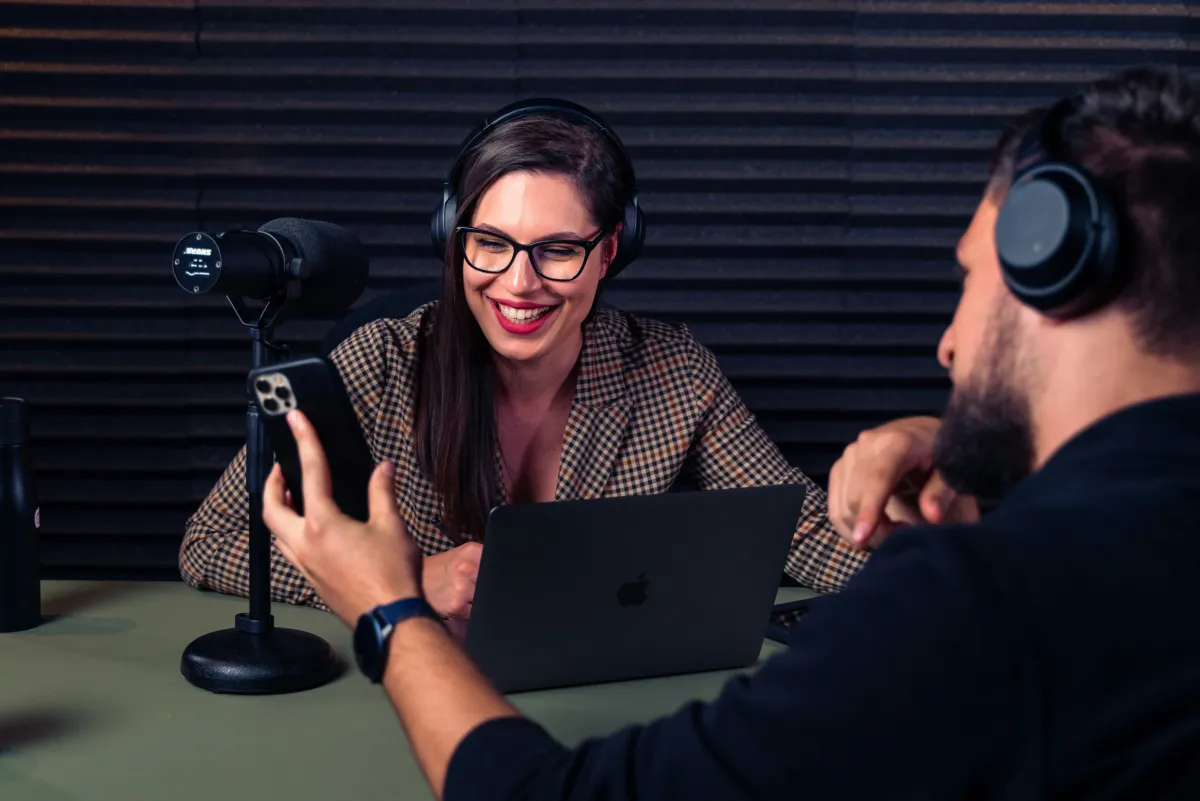 Photo by Flipsnack on Unsplash
Bilingual content extends reach without fragmenting creative quality.
Photo by Flipsnack on Unsplash
Bilingual content extends reach without fragmenting creative quality.
The Cultural Bridge Effect
There's a subtler benefit to bilingual Latin creators that goes beyond language mechanics. These creators serve as cultural bridges.
A Latin creator speaking English in a UGC clip doesn't just deliver the words in English. They deliver them with the warmth, expressiveness, and emotional openness that characterize Latin communication styles, as explored in Why Latin Creators Dominate Emotional UGC. English-speaking general audiences respond to that warmth. Spanish-speaking audiences respond to the cultural familiarity.
The same creator, the same personality, the same emotional style, simultaneously building trust with multiple audience segments. This is the cultural bridge effect: bilingual creators don't just translate content between languages. They translate cultural warmth across audiences.
For brands operating in the Americas, where the U.S., Mexico, Brazil, Colombia, Argentina, and dozens of other markets represent a combined consumer base of over a billion people, this bridging capability is a strategic asset that no amount of localized creative production can replicate.
Building a Bilingual Content Strategy
If you're running ads against both general-market and Hispanic audiences, here's the practical implication: your creator pool should start bilingual, not become bilingual through translation.
Source creators who are natively fluent in both languages. Brief them to deliver the same emotional beats in both languages. Test both versions against their respective audiences. Compare performance. In most cases, you'll find that the bilingual creator's Spanish version outperforms translated or separately sourced Spanish content, because the authenticity gap is zero.
This is the approach LatinaUGC was built around. 300+ vetted creators, the majority bilingual or trilingual, delivering authentic emotional content across English, Spanish, and Portuguese. One creator pool. Multiple markets. Zero translation tax.
Real creators. Real emotion. Ready to test in your next campaign. Browse the Catalog →
Sources
- SendShort, "Human presenters + native overlays hook rate analysis," recent
- Animoto, "State of Video 2026 Report," January 2026
- Industry data on UGC ad performance, recent
- U.S. Census Bureau, Hispanic bilingualism data, recent