
Building a UGC Creative Calendar: How Many Clips You Need and When to Refresh
Plan your UGC creative calendar with data-backed refresh cadences, clip volume guidelines, and budget planning for sustained ad performance.
The number one reason UGC ad performance degrades over time isn't targeting, isn't bidding, isn't audience saturation. It's creative fatigue. The same clip that delivered a 35% hook rate in week one delivers 22% by week four. The audience has seen it. The pattern recognition kicks in. The scroll resumes.
The fix isn't complicated. It's a calendar.
How Fast Does UGC Creative Fatigue?
There's no universal fatigue timeline because it depends on spend level and audience size. But the patterns are consistent enough to plan around.
At $50-100/day spend: Expect 3-4 weeks of strong performance per clip before fatigue signals appear. Smaller audiences see the same creative more often, so fatigue comes faster at higher frequency caps.
At $500-1,000/day: Expect 2-3 weeks. Higher spend burns through audience faster. If you're spending this much on a single clip, you're likely in trouble by week three.
At $1,000+/day: Expect 1-2 weeks. At this level, you need a constant pipeline of fresh creative. One winning clip is not a strategy; it's a brief reprieve.
Fatigue signals to watch:
- Hook rate drops 20%+ from peak
- CPC rises 25%+ from baseline
- CTR declines for two consecutive days
- Frequency exceeds 3.0 (Meta) or equivalent saturation on TikTok
When you see two or more of these signals simultaneously, it's time to rotate.
How Many Clips Do You Need Per Month?
This depends on your spend level and how many campaigns you're running. Here's a planning framework.
Low Spend ($1,000-3,000/month in ad spend)
- Active ads at any time: 3-5 clips
- Monthly refresh: Replace 2-3 clips (the ones showing fatigue)
- Total clips needed per month: 5-8 (your active set plus replacements)
- Testing clips per month: 3-5 new variants to find next winners
Monthly clip budget: 8-13 clips
At library pricing (from $8 per clip), this is a fraction of what one custom UGC video costs through a traditional creator marketplace. The cost math changes dramatically when you're sourcing from a library versus commissioning at $150-300 per video.
Medium Spend ($3,000-10,000/month)
- Active ads at any time: 8-12 clips across 2-3 campaigns
- Monthly refresh: Replace 4-6 clips
- Total clips needed per month: 12-18
- Testing clips per month: 5-8 new variants
Monthly clip budget: 17-26 clips
At this spend level, loading a wallet makes more sense than buying clips one at a time. You pay a standard price (from $8/video with a wallet) and higher top-ups earn a volume bonus — so your effective per-clip cost drops the more you buy, with no monthly commitment or expiry.
High Spend ($10,000+/month)
- Active ads at any time: 15-25+ clips across multiple campaigns and funnels
- Monthly refresh: Replace 8-12 clips
- Total clips needed per month: 25-40
- Testing clips per month: 10-15 new variants
Monthly clip budget: 35-55 clips
At this level, you're combining video library clips for hooks and reaction footage with custom orders for product-specific testimonials and GRWM content. LatinaUGC's model supports both: browse and purchase pre-recorded clips instantly, or place a custom order when you need a creator to interact with your specific product. The library covers your volume needs; custom orders cover your brand-specific needs.
The Monthly Creative Calendar Template
Here's a month-long calendar framework. Adjust the dates to your review cadence.
Week 1: Audit and Plan
- Review performance of all active clips from the previous month
- Flag fatigued clips (hook rate decline, CPC rise)
- Identify top-performing emotion/creator/format combinations
- Browse library for replacement clips that match winning patterns
- Purchase 8-15 clips depending on your spend tier
Week 2: Test New Variants
- Launch new clips as tests alongside current winners
- Use the 14-day testing framework to isolate emotion and creator variables
- Run new clips at 20-30% of total budget, winners at 70-80%
Week 3: Evaluate and Scale
- Review test results from week 2
- Promote winning new clips to primary rotation
- Pause fatigued clips from the previous cycle
- Scale winning new clips by 20-30% daily budget increase
Week 4: Pipeline Prep
- Monitor current rotation for early fatigue signals
- Browse library for next month's test candidates
- If any clips from week 2 tests showed promise but didn't win, save them for retesting in a different context (different payload, different audience)
- Generate a "clip wish list" for any gaps in your emotion/format coverage
The Emotion Rotation Strategy
Creative fatigue isn't just about showing the same clip too many times. It's about showing the same emotional pattern too many times. If every one of your hooks is a "surprised face," viewers develop pattern blindness to surprised faces, even from different creators. Rotating through Latin creators with distinct emotional ranges — and distinct cultural expressiveness — is one of the most effective ways to break that pattern blindness.
Rotate emotions, not just clips.
Month 1 primary emotion: Surprise (hooks) + Delight (testimonials) Month 2 primary emotion: Skepticism-to-conviction (hooks) + Excitement (testimonials) Month 3 primary emotion: Tearful joy (hooks) + Curiosity (testimonials)
Within each month, you're still testing multiple clips. But the emotional tone shifts quarterly, keeping the audience from developing pattern fatigue.
Budget Planning: Clips as a Cost of Ads
Think of clip purchasing as a line item in your media budget, not a separate content budget. The clips are fuel for your ads. When you run out of clips, your ads degrade.
Rule of thumb: Allocate 5-10% of your monthly ad spend to clip purchasing.
At $5,000/month ad spend, that's $250-500 on clips. At library prices, that covers 15-30+ clips, more than enough for a healthy rotation with testing capacity.
Compare that to the alternative: running fatigued creative for an extra two weeks because you don't have fresh clips ready. If your CPC rises 30% during those two weeks of fatigue, the wasted spend far exceeds the cost of fresh clips.
Single Purchase vs. Wallet: Which to Use
Load a wallet when:
- You're spending $3,000+/month on ads
- You need 15+ clips per month
- You want the best per-clip rate with no recurring commitment
- You're running always-on campaigns that need constant refresh
Wallet balances never expire and earn volume bonuses on larger top-ups, so you get more clips for the same budget the more you load.
Buy single clips when:
- You're testing UGC for the first time
- You run campaigns in bursts (launch periods, seasonal pushes)
- You need fewer than 10 clips per month
- You want to explore different emotion categories before committing to volume
Use bundles when:
- You need a batch of clips for a single campaign launch
- You want a curated set covering a specific emotion or format
- You're building a testing library from scratch
The Anti-Fatigue Mindset
The biggest mental shift for media buyers moving to UGC is accepting that creative is consumable. It gets used up. A clip that works brilliantly for three weeks isn't "broken" when it fatigues. It delivered its value. You need the next one ready.
Brands that treat UGC as a performance channel rather than a content project build the systems to sustain it: regular library browsing, structured testing, planned rotations, and budget allocated to clip purchasing as a cost of doing business.
The ones that don't end up in a cycle of panicked last-minute clip purchases when performance tanks, overpaying for rush custom orders, and missing performance windows while they wait for delivery.
Build the calendar. Buy the clips ahead of time. Rotate before fatigue forces you to.
From $8 per clip, with lifetime commercial rights. See how the math works. [View Pricing →]
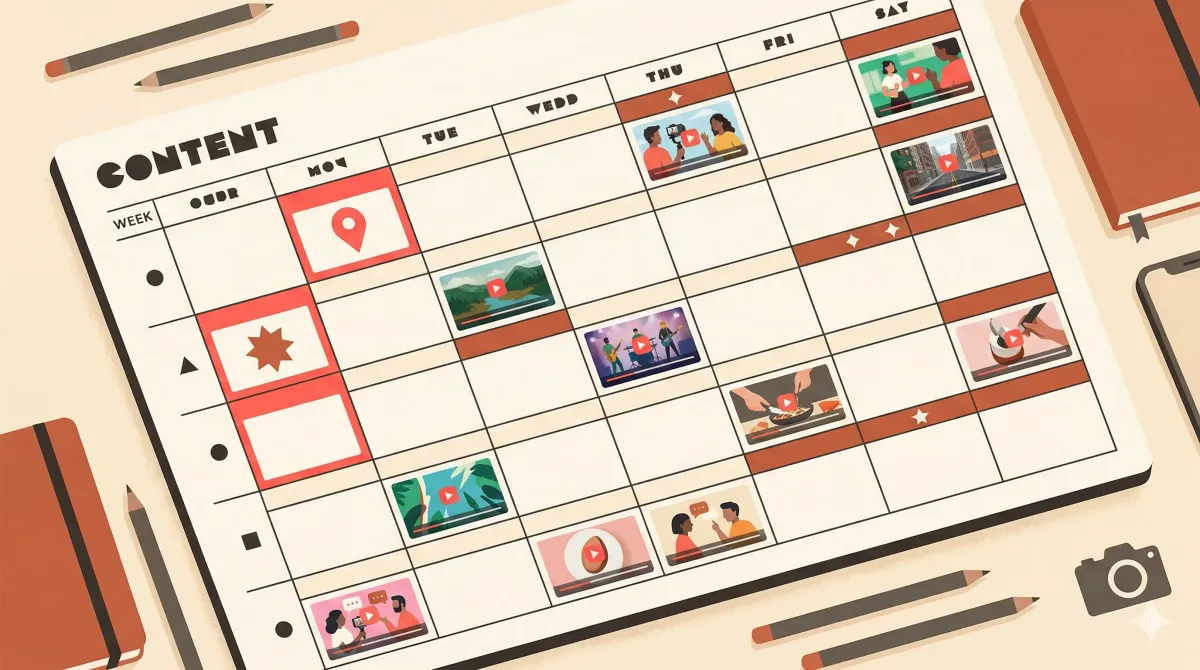 A structured creative calendar turns clip refresh from reactive scramble to proactive system.
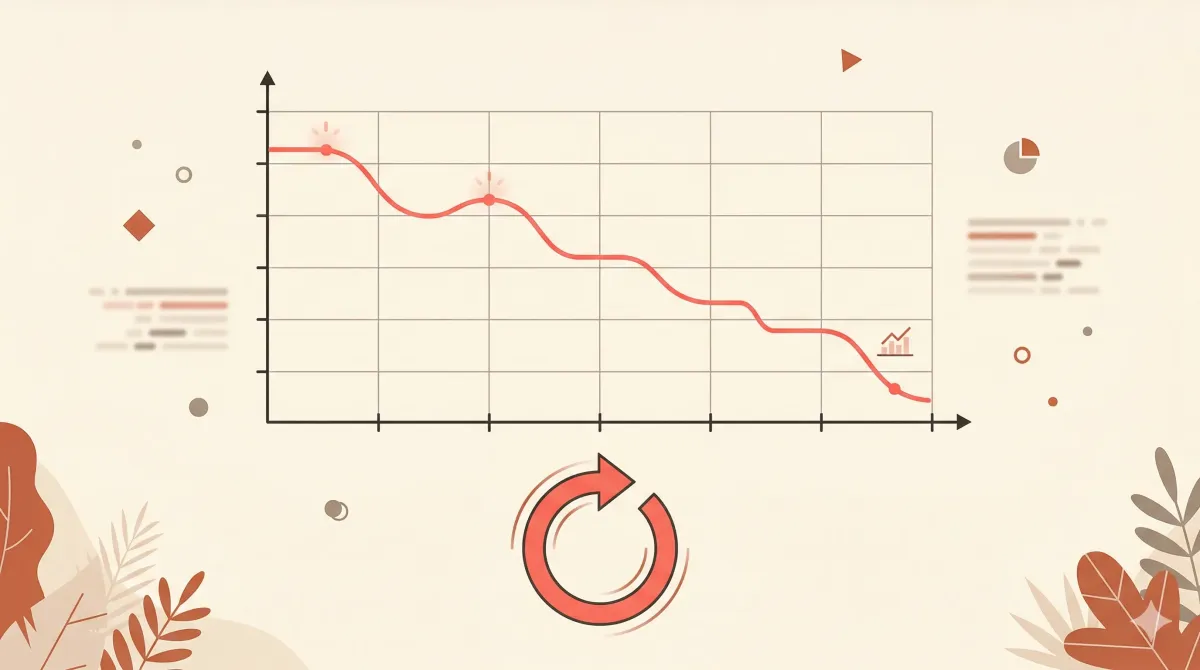 Creative fatigue is predictable. Your refresh schedule should be too.
Sources
- Animoto, "State of Video 2026 Report," January 2026
- Industry data on UGC pricing ($150-300/video average), Multiple sources (Whop, Influee, Billo), 2025-2026
- Industry data on UGC ad performance (4x CTR, 50% lower CPC), Multiple sources, Recent
- Vaizle, "Meta Hook Rate Benchmarks 2025," 2025